Nepal Trekking from Canada: Complete Guide for Canadian Travelers
Planning Nepal trekking from Canada? Learn flights, visa rules, trekking costs in CAD, insurance, and the best Nepal treks for Canadian travelers.
Why Nepal Trekking Appeals to Canadians
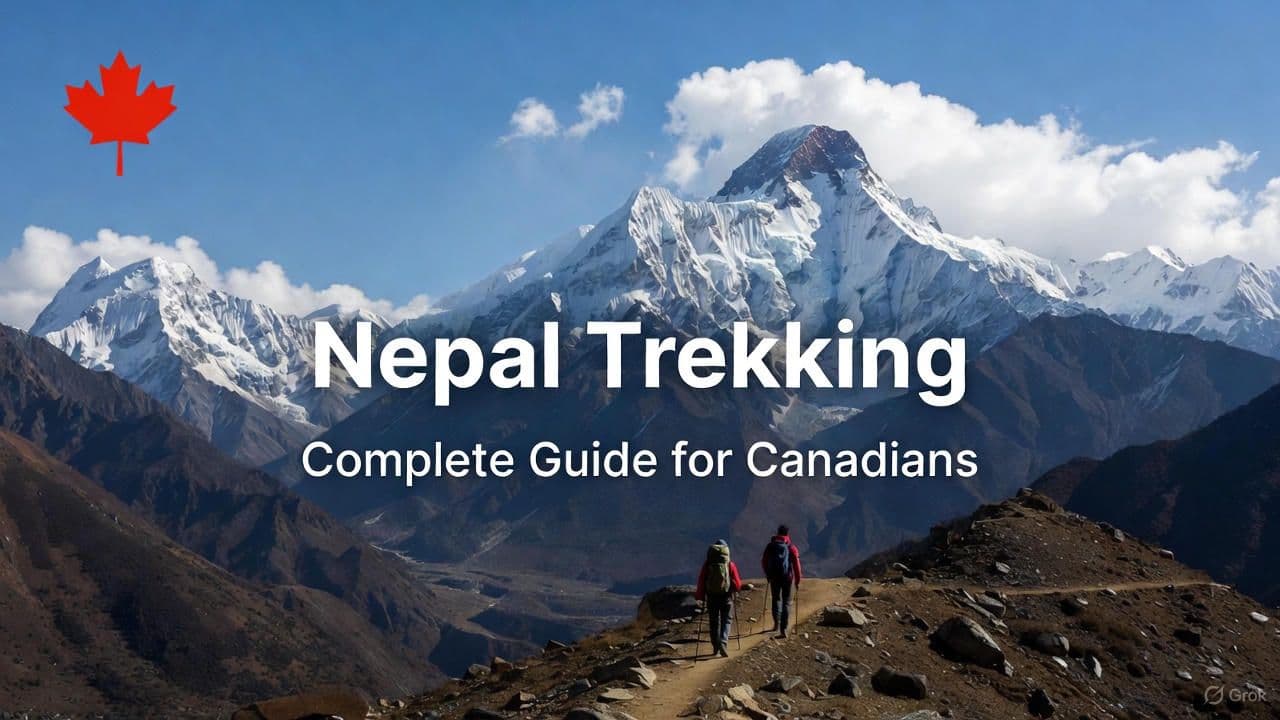
For many Canadian travelers, trekking in Nepal represents the ultimate long-haul adventure. Snow-capped Himalayan giants, deep cultural immersion, and some of the world’s most legendary walking trails make Nepal a dream destination; especially for Canadians who value wilderness, mountain landscapes, and meaningful travel experiences.
Nepal trekking from Canada is not a casual weekend getaway. It requires commitment, planning, and a willingness to travel halfway around the world. Yet this very distance is part of the appeal. Canadian trekkers often describe Nepal as a place that feels completely different from home: ancient mountain villages instead of highways, foot trails instead of roads, and centuries-old cultures thriving beneath peaks like Everest, Annapurna, and Langtang.
From Toronto, Vancouver, Calgary, or Montreal, the journey to Nepal is long, but it is also incredibly rewarding. Many Canadians already love the Rockies, the Coast Mountains, and the Yukon. Trekking in Nepal takes that passion to a global scale. Instead of day hikes, you spend weeks walking through changing landscapes, from subtropical valleys to alpine terrain above 4,000 meters, staying in local lodges and connecting directly with Himalayan communities.
Because of the distance and altitude, proper planning is essential for Canadian trekkers. Flights are long, and expensive (compared to closer destinations) from Canada. Trekking costs are usually quoted in USD but paid from a Canadian dollar budget. Travel insurance must include high-altitude evacuation. Visa rules, seasonal timing, and trek selection all matters more when you are investing significant time and money.
As a local Nepali trekking operator, we regularly work with Canadian travelers who want clear, honest information before committing to a trip. Questions about CAD costs, safety standards, realistic itineraries, and what makes sense for a 2–3 week vacation are common and important. So here we, are explaining you all those things.
This complete guide to trekking in Nepal for Canadians is designed to answer those questions in one place. We cover how to fly from Canada to Nepal, visa requirements, trekking costs (in Canadian Dollars CAD), insurance and altitude safety, the best treks for Canadian schedules, and why many Canadians choose to book directly with local Nepali operators instead of choosing global operators. Wherever helpful, we link to more detailed Canada-focused guides so you can plan with confidence.
Flights from Canada to Nepal
Getting from Canada to Nepal is the longest part of the journey, but it is also very manageable with proper planning. There are no direct flights from Canada to Kathmandu, so all routes involve at least one international transit.
Most Canadian trekkers depart from Toronto (YYZ) or Vancouver (YVR), with some travelers starting in Calgary or Montreal. Common routing options include connections through the Middle East (Doha, Dubai, Abu Dhabi) or Asia (Istanbul, Seoul, Hong Kong, Bangkok). Airlines frequently used by Canadians include Qatar Airways, Emirates, Turkish Airlines, Korean Air, and Cathay Pacific.
Total flight duration typically ranges from 20 to 30 hours, depending on connection times. Travelers from Vancouver often enjoy slightly shorter overall travel times than those departing from eastern Canada.
In terms of price, flights from Canada to Nepal vary significantly by season and booking window. As a general guideline, Canadian travelers can expect round-trip airfare to range between CAD 1,400 and CAD 2,300. Fall (September–November) and spring (March–May) are peak trekking seasons and usually come with higher fares. Winter and monsoon months often offer cheaper tickets, though weather conditions affect trekking plans.
For a full breakdown of routes, airlines, cheapest months, and booking strategies, we recommend reading our detailed guide on cheap flights from Canada to Kathmandu. That page also explains how to find reliable flights from Canada to Nepal without risky connections or excessive layovers.
Nepal Visa for Canadians
Canadian passport holders enjoy a relatively simple visa process for Nepal, which is good news for first-time trekkers. Canadians are eligible for a Nepal visa on arrival, available at Tribhuvan International Airport in Kathmandu.
Visa options are based on length of stay:
- 15 days
- 30 days
- 90 days
Most Canadian trekkers choose a 30-day MRE visa, which comfortably covers most trekking itineraries plus arrival and departure days. Longer treks or combined trips may require a 90-day option.
Visa fees are paid in USD, not CAD. While some travelers exchange CAD to USD before departure, many Canadians find it easiest to carry USD purchased from Canadian banks or exchange services. Passport validity must be at least six months beyond your arrival date, and you should have at least one blank page available.
Although the visa-on-arrival process is straightforward, small details such as payment currency, extension rules, and entry forms can cause confusion after a long flight. To make the process easier, we’ve created a comprehensive, step-by-step resource titled Nepal Visa for Canadians – Complete step-by-step Guide which clearly explains everything Canadian travelers need to know.
Nepal Trekking Cost for Canadians (CAD Breakdown)
Understanding trekking costs in CAD is one of the most important planning steps for Canadians. Nepal trekking expenses are often quoted in USD, but your real budget is always based on Canadian dollars.
At a high level, Nepal trekking cost for Canadians in CAD can range widely depending on trek choice, group size, comfort level, and season. Below is a realistic breakdown of the main cost components.
Trek Permits and Fees
All major treks require government permits such as TIMS cards and conservation or national park fees. These typically add up to CAD 50–150, depending on the region.
Guides and Porters
Hiring licensed guides and porters is strongly recommended, especially for altitude safety. For Canadians trekking 10–14 days, guide and porter services usually cost around CAD 400–800, depending on route and group size.
Accommodation and Meals
Most treks use teahouses (local lodges). Accommodation is simple but clean, with meals charged separately. Expect CAD 35–55 per day for food and lodging combined on popular routes, and the cost can go slightly higher at higher elevations.
Domestic Flights or Transport
Some treks, like Everest Base Camp, require domestic flights (e.g., Kathmandu–Lukla). These flights can cost CAD 550–650 round-trip for foreigners. Road-based treks such as Annapurna often cost less.
International Flights
As covered earlier, international airfare usually falls between CAD 1,400–2,300, depending on timing.
Miscellaneous Costs
Tips for guides and porters, charging devices, hot showers, snacks, and gear rentals can add CAD 200–500 over the course of a trek.
When everything is combined, most Canadians spend between CAD 3,500 and CAD 5,500 for a complete Nepal trekking experience, excluding personal shopping and upgrades.
For a detailed, line-by-line example focused on Nepal’s most famous trek, read our in-depth page on Everest Base Camp cost for Canadians. That guide explains Nepal trekking cost for Canadians in CAD in much greater detail.
Insurance & Altitude Safety
Travel insurance is not optional for trekking in Nepal, its a must. The Himalayas involve remote terrain, limited road access, and altitudes well above 4,000 meters. Even fit, experienced hikers can face unexpected challenges.
Why Insurance Is Critical
Your insurance policy must cover:
- High-altitude trekking (up to at least 5,500–6,000 meters)
- Helicopter evacuation
- Emergency medical treatment in Nepal
Many standard Canadian travel insurance plans exclude trekking above certain altitudes unless upgraded. You should carefully read policy wording and confirm coverage in writing before departure.
Canadian Insurance Considerations
Some Canadian providers offer adventure travel riders, while others require specialized insurers. Policies that look similar on paper may differ significantly in evacuation coverage limits or altitude caps. This is especially important for treks like Everest Base Camp, where evacuation costs can exceed CAD 6,000–12,000.
Altitude Awareness
Altitude sickness does not discriminate by age or fitness level. Canadian trekkers often underestimate how quickly altitude gains occur in Nepal. Proper acclimatization days, conservative pacing, hydration, and experienced guides are essential.
We strongly advise Canadians to trek with itineraries that prioritize safety over speed. We are preparing two dedicated resources:
- Travel insurance for Nepal trekking (Canada-focused)
- Altitude sickness guide for Canadian trekkers
Both will go deeper into insurance selection and altitude management specifically from a Canadian perspective.
Best Nepal Treks for Canadians
Because traveling from Canada to Nepal takes time and money, Canadians often want treks that feel truly worthwhile. Most Canadian travelers plan 2–3 weeks total, including international flights. Below are some of the best Nepal treks for Canadian schedules.
Everest Base Camp Trek
The Everest Base Camp Trek is the most iconic Himalayan journey. It offers dramatic scenery, Sherpa culture, and views of the world’s highest peaks. For Canadians, it is ideal if you want a once-in-a-lifetime experience and can commit around 14–16 days on the ground in Nepal.
Annapurna Base Camp Trek
The Annapurna Base Camp Trek is slightly shorter and more affordable than Everest. It features diverse landscapes, from terraced villages to a high alpine sanctuary surrounded by 7,000-meter peaks. Many Canadians choose this trek for its balance of scenery, comfort, and value.
Langtang Valley Trek
The Langtang Valley Trek is closer to Kathmandu and involves less travel time. It is a great option for Canadians with tighter schedules or those seeking a quieter, less crowded route while still experiencing high mountain scenery and Tamang culture.
Short Treks for 2–3 Week Trips
For Canadians limited to two weeks of vacation, shorter treks or custom itineraries can still deliver a rewarding Himalayan experience. Choosing routes with road access instead of domestic flights often reduces costs and logistics.
All of these treks can be customized to match Canadian vacation timelines, fitness levels, and comfort preferences.
Booking a Nepal Trek from Canada: The Local Operator Advantage
Many Canadians begin their planning by searching for Western travel agencies, but an increasing number now choose to book directly with local Nepali trekking companies: and for good reason.
Cost Transparency and Savings
Local operators eliminate multiple middlemen. This often results in lower overall costs or better services for the same price. You can expect that the pricing will also be explained clearly in CAD-equivalent terms as well, helping Canadians budget accurately.
Local Expertise and Safety
Nepali operators live and work in the mountains year-round. Guides are trained in altitude safety, weather assessment, and emergency response. This local knowledge is especially valuable for Canadians unfamiliar with Himalayan conditions.
Ethical and Responsible Trekking
Booking locally ensures that your money directly supports Nepali guides, porters, and communities. Many Canadian travelers appreciate this ethical approach to travel.
Communication and Customization
Modern Nepali trekking companies regularly work with Canadians across time zones. Trips can be customized around Canadian holiday schedules, flight arrivals, and acclimatization needs.
If you are planning Nepal trekking from Canada, working directly with a reputable local operator often leads to a safer, more authentic, and better-value experience—without aggressive sales pressure.
Frequently Asked Questions
01Do Canadians need a visa for Nepal?
Yes. Canadians can obtain a visa on arrival in Kathmandu. Options include 15, 30, or 90 days, paid in USD.
02How much does Nepal trekking cost in CAD?
Most Canadian trekkers spend between CAD 3,500 and CAD 5,500, depending on trek choice, flights, and comfort level.
03How long is the flight from Canada to Nepal?
Total travel time is usually 20–30 hours, with one or two international connections.
04Is Nepal trekking safe?
Yes, when properly planned. Hiring licensed guides, having appropriate insurance, and following acclimatization guidelines are key to safety.
05When is the best time for Canadians to trek in Nepal?
The best seasons are spring (March–May) and fall (September–November), when weather and visibility are most stable.
Nepal trekking from Canada is a major journey: but for many Canadians, it becomes one of the most meaningful travel experiences of their lives. With proper planning, realistic budgeting in CAD, and support from experienced local professionals, trekking in Nepal is not only achievable, but deeply rewarding.
Thinking about your next Himalayan journey?
Tell us what you have in mind. We'll help you find the right route, pace, and experience for your trip.