Advisory Update: A Shift to Level 2
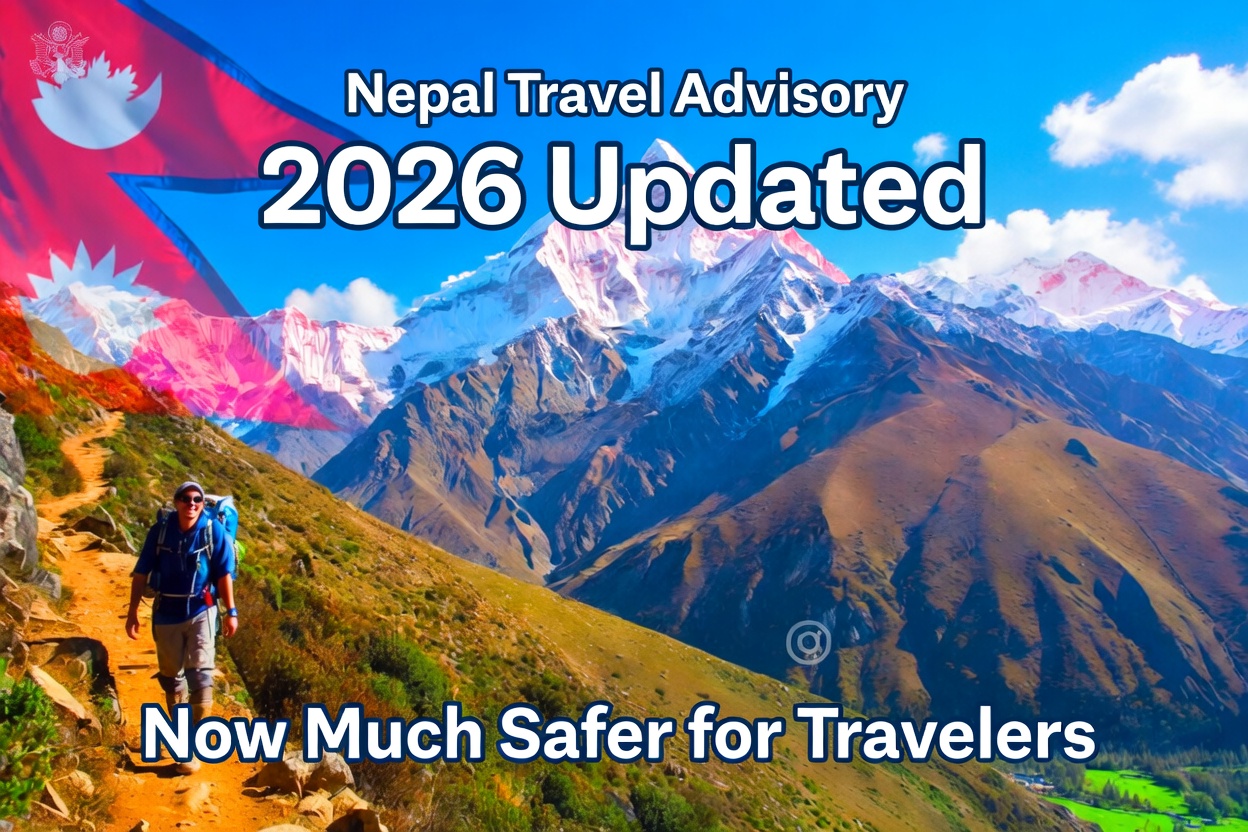
In the latest Nepal travel advisory 2026 update, the United States has lowered Nepal’s travel status to Level 2 – Exercise Increased Caution.
This change matters because travel advisories often shape global perception. For many travelers researching Nepal, especially first-time visitors, advisory levels can feel like a direct signal of safety. A downgrade from Level 3 to Level 2 is therefore definitely a positive development, but it still requires careful interpretation.
From our position on the ground at RM Treks, this update aligns with what we have been observing across trekking regions and cities, a stable and functioning travel environment with manageable, localized risks.
What Changed, and Why it Changed
Previously, Nepal was under Level 3 – Reconsider Travel, which generally indicates higher concern due to instability or broader risks.
The move to Level 2 reflects several improvements such as:
- Reduced frequency and intensity of nationwide disruptions
- More predictable local conditions
- Continued stability in key tourism and trekking regions
This does not mean Nepal has become risk-free. No destination is. Rather, it signals that conditions have improved enough that normal travel can resume with standard precautions.
For reference, you can review the official advisory here:
U.S. State Department – Nepal Travel Advisory https://travel.state.gov/content/travel/en/traveladvisories/traveladvisories/nepal-travel-advisory.html
Additional global perspectives:
- UK Government Travel Advice: https://www.gov.uk/foreign-travel-advice/nepal
- Government of Canada Travel Advice: https://travel.gc.ca/destinations/nepal
- Australian Smart Traveller: https://www.smartraveller.gov.au/destinations/asia/nepal
What “Level 2” Actually Means
This is where most misunderstandings happen. Level 2 means “Exercise Increased Caution.”
However, this category is broad. Countries are placed in Level 2 for very different reasons, including terrorism risks, high crime rates, political instability, and civil unrest
Nepal falls into one of the lower-risk subcategories within Level 2.
The primary concern noted is occasional and localized civil unrest, such as protests or strikes. This is fundamentally different from countries where Level 2 is driven by systemic violence or security threats.
In practical terms, Nepal’s advisory is not about ongoing danger to tourists. It is about situational awareness in specific, limited contexts, usually in urban areas.
Nepal vs Other Level 2 Countries
It is important to understand that not all Level 2 countries present the same level of risk. For example:
- Some countries under Level 2 are categorized due to more serious concerns such as terrorism threats or regional conflicts. For example, destinations like Turkey, France, the United Kingdom (UK), India, and the Philippines fall into this category for reasons that differ significantly from Nepal’s situation.
- And others, like Nepal, are categorized due to occasional political demonstrations or disruptions
Nepal’s risk profile is closer to relatively stable destinations where:
- Infrastructure is functioning
- Tourism is active
- Risks are predictable and avoidable
This distinction is often lost in headlines, which can make Level 2 sound more severe than it actually is in Nepal’s case.
Ground Reality in Nepal
From daily operations across trekking routes and cities, the on-the-ground picture is consistent:
Trekking Regions
Areas such as Everest, Annapurna, and Langtang remains operational & stable, largely unaffected by political activity, and largly focused on tourism and local livelihoods.
Trekkers continue to complete the trails without disruption. Guides, lodges, flights, and logistics are functioning normally.
You can explore trekking options here:
https://rmtreks.com/everest-region-trekking/
Urban Areas
Cities like Kathmandu occasionally experience small-scale protests and temporary traffic disruptions. These events are typically localized, very short-lived, and avoidable with basic awareness.
They rarely impact tourist areas directly, and when they do, the effect is usually logistical rather than safety-related.
Wildlife and Safari Areas
Regions like Chitwan remain calm and tourism-focused, with no connection to political activity.
Relevant reference:
https://rmtreks.com/chitwan-jungle-safari-tour/
What This Means for Travelers Right Now
For someone planning a trip, the advisory translates into a simple reality: Travel to Nepal is active, ongoing, and manageable.
You do not need extraordinary precautions. What is expected is:
- Awareness of your surroundings
- Avoiding large gatherings or protests
- Following local guidance when needed
These are standard practices in many global destinations.
For most travelers, especially those visiting trekking regions or structured itineraries, the experience is generally very smooth, organized and comparable to other popular travel destinations in Asia.
For a broader overview of travel preparation:
https://rmtreks.com/category/travel-guide/
Forward Outlook
If current conditions continue, Nepal is most probably moving toward a Level 1 classification soon, which represents the lowest advisory level. This is not guaranteed, and advisory changes depend on sustained stability over time. However, based on current ground conditions, tourism recovery patterns, and reduced disruptions, a further improvement is possible if trends remain consistent.
Our Perspective
The Nepal travel advisory 2026 update reflects a shift toward stability, but it is not a signal to ignore context.
Nepal today sits in a position where:
- Risks still exist, but are very limited and manageable
- Travel infrastructure is functioning
- And most importantly, visitor experiences remain largely unaffected
The gap between perception and reality is often wider than the actual risk. Understanding what Level 2 truly represents allows travelers to make decisions based on clarity rather than concern.
FAQs
Nepal is generally safe for travelers, with most risks limited to localized and manageable situations.
It means travelers should exercise caution mainly due to occasional civil unrest, not widespread safety threats.
Tourists are rarely directly affected, as protests are usually localized and avoidable.
Trekking regions remain stable and continue to operate normally with no major safety concerns.
The Level 2 advisory does not suggest canceling travel, only being aware and prepared. Nepal is safe for travelers.
Nepal’s risks are generally lower and more predictable than many other Level 2 destinations like India, Thailand, Indonesia.
Kathmandu is very safe overall, with occasional minor disruptions that do not impact visitors.
It is possible if stability continues, but it depends on long-term consistency in conditions.
No special precautions are required beyond normal travel awareness and avoiding large gatherings.