1. Introduction
Helicopter rescues play a legitimate, life-saving role in Himalayan trekking. Nepal’s trekking regions—Everest, Annapurna, Langtang, Manaslu, and others—are remote, high-altitude environments where road access is limited or nonexistent. When a trekker develops a true medical emergency, such as severe high-altitude pulmonary edema (HAPE), high-altitude cerebral edema (HACE), major trauma, or a life-threatening illness; helicopter evacuation can mean the difference between life and death.
At the same time, helicopter rescues are complex, expensive, weather-dependent, and logistically demanding. They require coordination between ground teams, aviation operators, medical professionals, and insurers—often under severe time pressure.
Over the past decade, however, Nepal’s rescue system has also been misused. Investigations by Nepali authorities and international journalists have documented cases of unnecessary evacuations, inflated insurance claims, and collusion between certain operators. These practices—commonly referred to as “helicopter rescue scams”—have harmed travelers, ethical trekking companies, insurers, and Nepal’s global tourism reputation.
This article is written from the perspective of RM Treks, a locally owned, ethical trekking company that has operated across Nepal’s mountains for many years. Our purpose is not to sensationalize or accuse; but to educate, clarify, and protect travelers by explaining:
- How helicopter rescues are supposed to work
- How abuse occurred, and why
- What has changed through enforcement and reform
- How trekkers can protect themselves
- How RM Treks handles emergencies ethically and transparently
Nepal remains one of the world’s most rewarding trekking destinations. Understanding this topic helps ensure that rescue systems remain available for those who truly need them.
2. History and Context
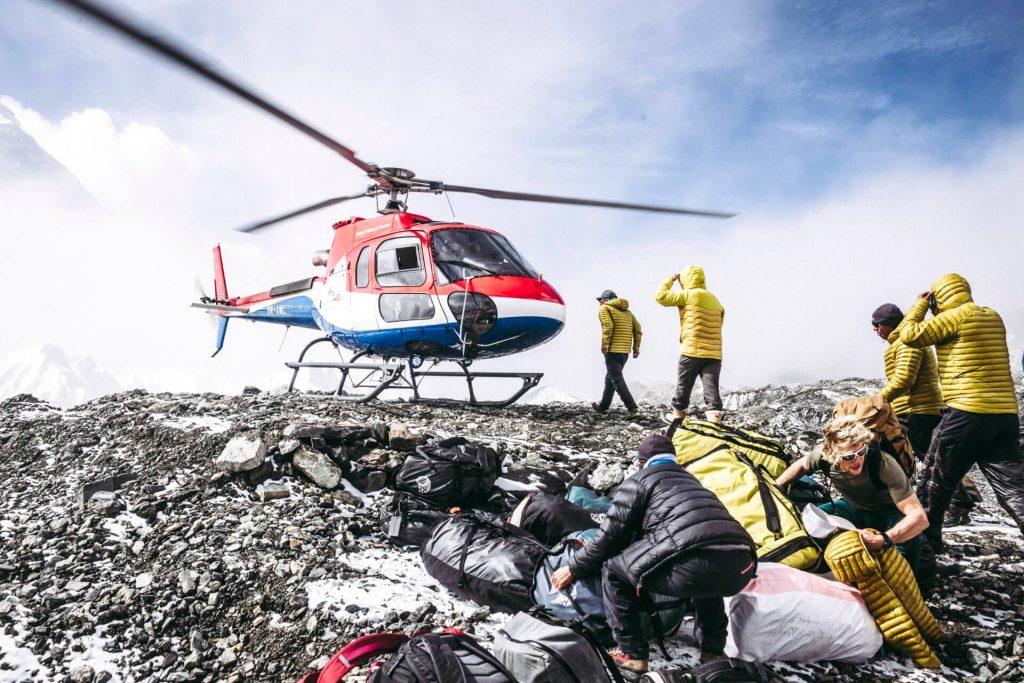
Growth of Adventure Tourism and Helicopter Rescues
Since the 1990s, Nepal has seen steady growth in international trekking and mountaineering. With this growth came increased demand for emergency evacuation services, especially in high-altitude regions where descending by foot can take days.
Helicopters became an essential safety net for:
- Severe altitude illness
- Traumatic injuries (falls, rockfall, avalanches)
- Cardiac or respiratory emergencies
- Rapid evacuation in extreme weather windows
Used correctly, these services saved countless lives.
When and How Fraudulent Practices Emerged
Around the mid-2010s, insurers and Nepali authorities began noticing patterns of unusually frequent evacuations, often for mild or manageable conditions. Some trekkers were evacuated after only minor headaches, fatigue, or routine gastrointestinal illness; conditions that normally resolve with rest and descent.
Investigations suggested that a financial incentive chain had developed: certain trekking agencies, guides, medical intermediaries, and helicopter operators allegedly benefited from inflated or unnecessary evacuation claims.
International Media Coverage (2018 Onward)
From 2018 onward, respected international outlets reported on the issue, highlighting concerns raised by insurers and Nepali regulators. These reports did not claim that all rescues were fraudulent, far from it, but showed how weak oversight allowed abuse by a small but damaging subset of actors.
This distinction is crucial: most trekking professionals in Nepal are ethical, and many rescues are entirely justified.
3. How the Helicopter Rescue Scam Worked
Understanding how misuse occurred helps travelers recognize red flags—without undermining trust in genuine emergency care.
3.1 Unnecessary Evacuations
Some trekkers were advised to evacuate for:
- Mild Acute Mountain Sickness (AMS) without red-flag symptoms
- Routine colds or stomach upset
- Fatigue that improved after rest
In ethical practice, these situations are managed through rest, hydration, medication, acclimatization days, or controlled descent, not immediate helicopter evacuation.
3.2 Collusion Between Parties
Investigations documented cases where:
- Guides pressured trekkers to evacuate
- Certain clinics endorsed evacuation without clear medical necessity
- Helicopter operators prioritized volume over medical justification
This alleged collusion created a closed loop where evacuation became a profit center rather than a medical decision.
3.3 Inflated Insurance Claims
Evacuations were often billed at inflated rates, sometimes including:
- Questionable medical reports
- Misclassification of conditions as life-threatening
- Multiple billing layers
Ultimately, insurers bore the cost, leading to higher premiums and stricter policies for travelers worldwide.
3.4 Weak Oversight and Incentives
At the time, oversight of remote operations was limited. Weather, terrain, and communication challenges made real-time verification difficult. Financial incentives filled the gap left by regulation.
4. Recent Developments and Enforcement (2025–2026)
Government and Police Action
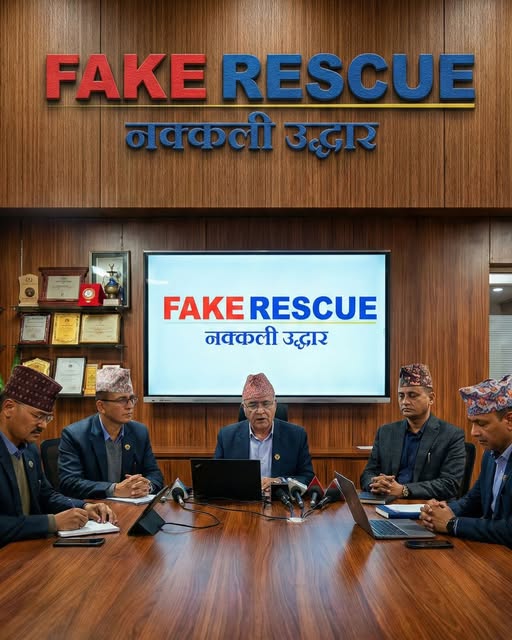
In 2025–2026, Nepal intensified enforcement. The Nepal Police, through its Central Investigation Bureau, launched coordinated investigations into organized rescue fraud.
Reports published in early 2026 estimated tens of millions of dollars in fraudulent claims over several years, leading to arrests of individuals linked to fake evacuations.
Regulatory Response
Government bodies, including the Ministry of Culture Tourism and Civil Aviation and the Civil Aviation Authority of Nepal, have:
- Tightened oversight of helicopter operations
- Scrutinized medical justifications for evacuations
- Increased coordination with insurers
What Has Changed—and What Is Evolving
While enforcement has improved:
- Oversight is stronger than before
- Insurers now demand clearer documentation
- Ethical operators are more visible
Reform is ongoing. Travelers should remain informed and proactive—but not fearful.
5. Consequences and Impacts
5.1 Impact on Travelers
- Higher insurance premiums
- Stricter evacuation criteria
- Confusion and anxiety during genuine emergencies
5.2 Impact on Nepal’s Tourism Reputation
Negative headlines risk painting Nepal unfairly as unsafe or unethical, despite the professionalism of most operators.
5.3 Pressure on Legitimate Rescue Operations
False alarms strain aviation resources and may delay responses for real emergencies.
5.4 Unhealthy Price Wars Among Trekking Agencies
Some agencies, attempting to recover costs or increase margins, engaged in underpricing treks and forcing evacuations as hidden revenue streams, distorting the market and undermining trust.
6. Psychological Impact on Travelers
Beyond financial harm, misuse created psychological stress:
- Fear of being exploited during illness
- Anxiety about whether evacuation advice is genuine
- Loss of confidence in local expertise
These concerns can worsen altitude illness outcomes, as stress and mistrust impair decision-making.
7. How Travelers Can Protect Themselves
Understand Altitude Illness Basics
Learn the difference between:
- AMS (headache, nausea, fatigue)
- HAPE/HACE (breathlessness at rest, confusion, loss of coordination)
Mild AMS is common and manageable; HAPE/HACE are emergencies.
Choose Ethical Trekking Companies
Ask:
- How evacuation decisions are made
- Who authorizes helicopter calls
- Whether guides are medically trained
Travel Insurance Best Practices
- Confirm high-altitude coverage
- Understand exclusions
- Know claim documentation requirements
Ask the Right Questions During the Trek
A responsible guide welcomes questions and explains options—without pressure.
8. How RM Treks Handles Medical Emergencies
At RM Treks, helicopter evacuation is always a last resort.
8.1 Acclimatization and Prevention
- Conservative ascent profiles
- Mandatory acclimatization days
- Continuous monitoring
8.2 Guide Training
Our guides are trained in:
- Wilderness First Aid (WFA/WFR)
- Altitude illness recognition
- Emergency communication
8.3 Step-by-Step Emergency Response
- Immediate assessment
- Rest, hydration, medication
- Descent if needed
- Consultation with senior staff
- Evacuation only if medically justified
8.4 Decision-Making Hierarchy
No single individual can authorize evacuation. Decisions involve:
- Lead guide
- Operations manager
- Medical consultation where possible
8.5 Weather and Ground Alternatives
We plan for weather delays and maintain contingency ground evacuation plans.
9. Ethics, Responsibility, and Long-Term Sustainability
Ethical practices protect:
- Travelers
- Local communities
- Nepal’s global reputation
And RM Treks as a company is committed to:
- Transparency
- Accountability
- Traveler-first decision-making
Supporting responsible local businesses helps ensure that rescue systems remain available when they truly matter.
10. FAQs
A helicopter rescue in Nepal is an emergency evacuation method used when a trekker faces a life-threatening condition in a remote mountain area where walking descent would be too slow or dangerous. It exists because high-altitude trekking regions lack roads, medical facilities, and rapid ground transport, making helicopters the only realistic option for severe altitude illness, major trauma, or sudden medical emergencies.
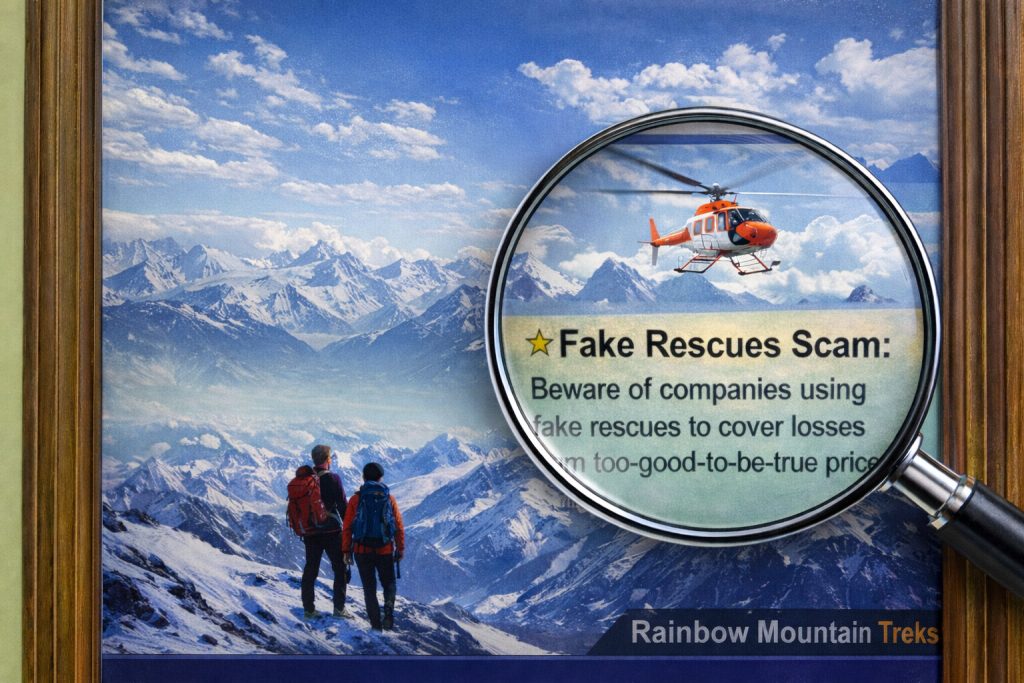
A helicopter rescue scam refers to documented cases where trekkers were evacuated by helicopter without genuine medical necessity, often for mild or manageable conditions, so that insurance claims could be generated for financial gain. These cases involved misuse of emergency classifications rather than fake helicopters, and investigations showed the issue was systemic abuse by a small number of unethical actors, not the entire trekking industry.
No, helicopter rescues in Nepal are generally legitimate and lifesaving when used correctly. The vast majority of evacuations are medically justified, professionally conducted, and ethically managed, but a minority of misuse cases created reputational damage that made it appear more widespread than it actually was.
Helicopter rescue fraud began drawing serious attention around 2016–2018 when international insurers noticed unusually high evacuation volumes for non-critical cases, prompting investigations that later appeared in international media and led to government scrutiny and regulatory reforms.
Unnecessary evacuations usually occurred when trekkers experiencing mild altitude symptoms or routine illness were told they faced serious danger and needed immediate helicopter extraction, even though rest, acclimatization, or controlled descent would normally resolve the condition safely.
Altitude symptoms were misused because they are difficult for non-medical travelers to independently assess, and because insurers generally approve evacuation quickly for altitude emergencies, making them easier to classify as urgent even when clinical thresholds were not met.
Investigations showed involvement of certain guides, trekking agencies, medical intermediaries, and helicopter operators acting together, but it is important to note that these cases represented a small segment of the industry and not the majority of Nepali trekking professionals.
Insurance companies absorbed large financial losses from inflated or unnecessary evacuation claims, which led to higher premiums, stricter policy wording, increased documentation requirements, and greater scrutiny of evacuation requests worldwide, not just in Nepal.
A trekker should never be forced into a helicopter evacuation, but pressure can occur when travelers lack altitude knowledge or are fearful, which is why ethical operators emphasize informed consent, medical explanation, and step-by-step decision making rather than urgency-based pressure.
True helicopter evacuation is medically necessary for conditions such as high-altitude pulmonary edema, high-altitude cerebral edema, severe trauma, uncontrolled bleeding, cardiac emergencies, or situations where descent on foot would create unacceptable risk to life.
Mild acute mountain sickness is not a reason for helicopter rescue, as it is common, expected at altitude, and usually resolves with rest, hydration, medication, acclimatization days, or descent, which is why evacuation for mild symptoms is considered medically inappropriate.
Weak oversight in remote mountain regions made it difficult to verify medical necessity in real time, allowing financial incentives to influence decisions until regulatory bodies strengthened coordination between aviation authorities, police, and insurers.
The Nepal government, through police investigations and aviation regulation, has arrested individuals, uncovered large-scale fraudulent claims, tightened helicopter flight approvals, and increased oversight of medical justification to prevent future abuse.
While no system is completely immune to misuse, helicopter rescue abuse has significantly declined due to enforcement actions, insurer vigilance, and increased awareness, making today’s environment far more regulated than during the peak misuse years.
The issue damaged Nepal’s image internationally by creating fear and mistrust among travelers, even though the majority of trekking experiences remain safe, ethical, and professionally managed, which is why transparency and education are now essential.
Many trekkers developed anxiety around medical decisions, fear of being exploited while ill, and uncertainty about whether evacuation advice was genuine, which can worsen altitude outcomes because stress and hesitation interfere with proper acclimatization and recovery.
Trekkers protect themselves by understanding altitude illness basics, choosing ethical trekking companies, asking clear questions about emergency protocols, and ensuring evacuation decisions involve medical reasoning rather than urgency or financial pressure.
Trekkers should ask how evacuation decisions are made, who authorizes helicopter calls, whether guides have medical training, how altitude illness is managed on the ground, and whether helicopter evacuation is considered a last resort rather than a standard response.
RM Treks treats helicopter evacuation strictly as a last resort, using conservative acclimatization schedules, trained guides, layered decision-making, medical consultation when possible, and prioritizing descent and ground solutions whenever they are safe and effective.
Ethical companies do not delay necessary rescues, but they do avoid premature evacuations by carefully monitoring symptoms and acting decisively only when medical thresholds indicate genuine danger, which protects both traveler safety and system integrity.
Yes, weather often delays helicopter flights in the Himalayas, which is why responsible operators plan for ground evacuation alternatives, sheltering, and medical stabilization rather than relying solely on immediate air access.
Insurance does not guarantee evacuation approval, as insurers require medical necessity, documentation, and compliance with policy terms, and unjustified evacuations can be denied or later disputed.
Ethical rescue practices protect travelers, preserve trust, keep insurance accessible, prevent resource misuse, and ensure helicopter services remain available for genuine emergencies, which is essential for the long-term sustainability of Nepal’s trekking industry.
Yes, Nepal remains one of the safest and most rewarding high-altitude trekking destinations when travelers choose responsible operators, understand altitude risks, and follow evidence-based safety practices.
11. Further Reading & Trusted Resources
A. RM Treks – Safety, Ethics & Trekking Knowledge
- https://rmtreks.com/preparing-for-high-altitude-hiking-in-nepal/ – Practical acclimatization guidance
- https://rmtreks.com/safety-protocols-in-the-himalayas/ – Our safety systems
- https://rmtreks.com/about/ – Company values and history
- https://rmtreks.com/official-documents/ – Legal and operational transparency
- https://rmtreks.com/client-stories/ – Real trekker experiences
- https://rmtreks.com/activity/trekking/ – Trekking programs and approach
B. High-Altitude Medical Expertise
- ISMM: https://www.ismm.org/
- ISMM Altitude Illness: https://www.ismm.org/medical_conditions/altitude_illness
- UIAA Medical Commission: https://theuiaa.org/medical/
- CDC High-Altitude Travel: https://wwwnc.cdc.gov/travel/page/travel-to-high-altitudes
- NHS Altitude Sickness: https://www.nhs.uk/conditions/altitude-sickness/
C. Travel Insurance & Emergency Evacuation
- ITIJ: https://www.itij.com/
- ITIJ Investigation: https://www.itij.com/latest/long-read/high-level-fraudsters
- International SOS: https://www.internationalsos.com/medical-evacuation
- World Nomads: https://www.worldnomads.com/travel-safety/asia/nepal/altitude-sickness
D. Independent Journalism & Official Investigations
- The Guardian (2018): https://www.theguardian.com/world/2018/sep/03/nepal-cracks-down-on-multimillion-dollar-helicopter-rescue-scams
- Nepali Times: https://nepalitimes.com/multimedia/heli-rescue-fraud-tarnishes-nepal-s-image
- Kathmandu Post (2018): https://kathmandupost.com/money/2018/07/31/govt-moves-to-clamp-down-on-helicopter-rescue-scam
- Kathmandu Post (2018): https://kathmandupost.com/money/2018/09/01/centre-eliminates-dubious-emergency-operators
- Fiscal Nepal (2026): https://www.fiscalnepal.com/2026/01/25/24102/nepal-police-uncover-19-7-million-fake-helicopter-rescue-scam-arrest-operators-targeting-foreign-trekkers/
- Nepal News (2026): https://english.nepalnews.com/s/crime-news/nepal-police-arrest-six-in-fake-helicopter-rescue-scam-targeting-foreign-tourists/
E. Government & Regulatory Bodies
- Nepal Tourism Board: https://www.welcomenepal.com/
- MoCTCA: https://www.tourism.gov.np/
- CIvil Aviation Authority of Nepal, CAAN: https://www.caanepal.gov.np/
- Nepal Police CIB: https://nepalpolice.gov.np/
12. Conclusion
Nepal remains a safe, extraordinary trekking destination when approached with knowledge, preparation, and ethical partners. Helicopter rescues are a critical safety tool, not a business model.
By understanding how misuse occurred, and how it is being addressed, travelers can trek with confidence. At RM Treks, our commitment is simple: your safety, your trust, and the long-term integrity of Nepal’s mountains.