Introduction: The Call of the Himalayas on Two Wheels
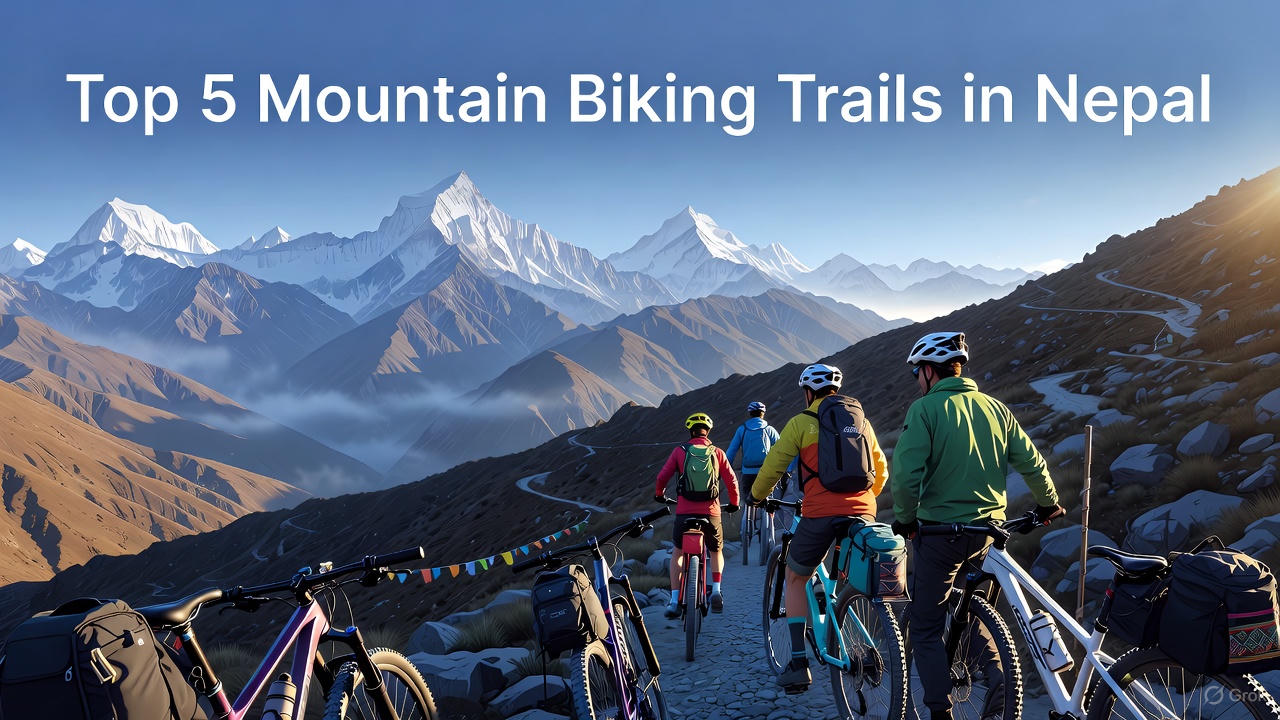
There’s a particular hush before dawn in the Himalayas: prayer flags lift, a dog barks, and a single ridge brightens orange. On foot this moment is reverent; on two wheels it becomes urgent and alive. Mountain biking in Nepal is less a sport and more a way to read the land; switchbacks that were once mule tracks, village trails that fold into monasteries, dusty descents that open into broad river valleys.
At RM Treks we have spent decades guiding people across these mountains by foot. In recent years we’ve begun translating that experience to the bike: the same local knowledge, the same care for weather and people, now geared towards riders. We ride because the Himalayas change when you carry momentum: the vistas sweep in faster, the local greetings become quick and sincere, and every descent writes its own story across your legs and memory.
This guide is our field-tested, rider-first take on the top five MTB trails in Nepal for 2026: routes we love, routes we’ve ridden, and routes we design for guests who want the mountain, the culture, and the safe, responsible logistics to enjoy both.
Why Mountain Biking in Nepal Is Like Nowhere Else
Nepal’s spine contains more than mountains; it contains contrasts. In a single week you can move from subtropical river valleys to arid Tibetan-like plateaus; from village markets selling fresh chapati to monasteries where butter lamps glow through dusk. That diversity turns every ride into a chapter, not just a workout.
Three things set Nepal apart for the mountain biker:
- Terrain variety. Nepal has everything: dusty jeep roads, rocky singletrack, high-altitude passes, and undulating mid-hill farm tracks. You can climb beneath rhododendron forests, descend into river gorges, and ride a high-desert plateau with prayer wheels spinning at the trailside.
- Cultural encounters. Trails thread villages and religious sites; each coffee stop can become a lesson in local life. Riding into a village, you might pass children running home from school, farmers stacking fodder, or a monastery bell sounding across terraces. These encounters are not an add-on, they are the ride.
- Responsible, locally rooted guiding. We don’t parachute in foreign guides and ignore local impacts. We work with village lodges, local mechanics, and guides who know how the weather behaves in November and March. We design itineraries that prioritise small group sizes, minimal waste, and local benefit.
Practical note: the seasons matter (autumn and spring are prime, though winter is excellent for low-altitude loops). We monitor routes constantly and adapt for road repair, weather, or local festivals; because the mountain respects only the prepared. For season guidance and trail planning we lean on regional expertise and historical weather patterns to shape safe, enjoyable departures.
Top 5 MTB Trails in Nepal for 2026
Below are the five routes we recommend for 2026: each entry includes region details, rough duration, best season, max altitude, terrain character, cultural notes, safety considerations, a short mini-itinerary, and why you should ride it with us.
1) Annapurna Circuit MTB Trail — the classic Himalayan epic
Region: Annapurna / Kali Gandaki Valley
Duration: 10–18 days (depending on whether you shuttle or ride full circuit)
Best season: Autumn (Sep–Nov), Spring (Mar–May); shoulder months work for shorter versions.
Max altitude: Up to Thorong La pass (~5,416 m) on the classic trekking route (the full MTB circuit often uses alternates to avoid the highest, most technical walking sections).
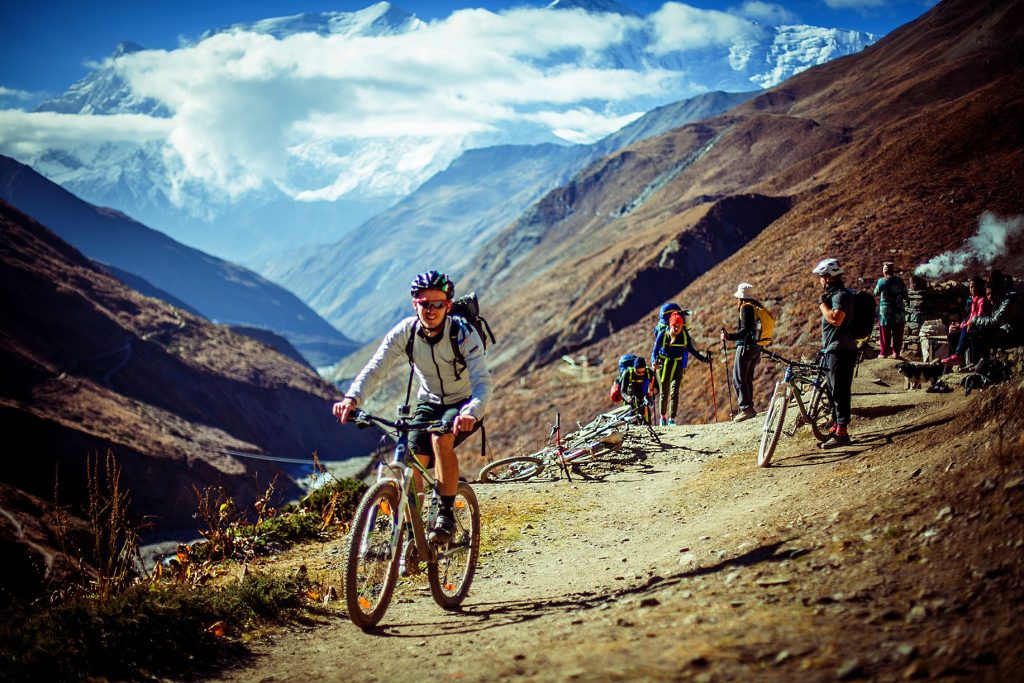
Terrain & highlights: Long gravel approaches, rocky high-pass sections, steep descents, broad river valleys, terraced farmland. On a bike the route mixes prolonged climbs, long technical downhills and remote villages. The deepest gorge in the world (Kali Gandaki) frames much of the ride.
Cultural encounters: Newari and Gurung villages, monastery stops, roadside mani walls, local apple orchards in mid-hills. Teahouses offer real conversation and dal bhat-filled recovery.
Safety notes: Thorong La is a high, exposed pass; weather can turn quickly. Many guided MTB groups avoid the walking-intensive sections or use vehicle shuttles to bypass unstable parts. Altitude management is critical; we recommend staged acclimatization days. Helicopter evacuation is possible in emergencies but costly—travel insurance must cover it. For many riders a staged circuit that stays below the highest technical pass offers the best balance of challenge and safety.
Mini-itinerary (10 days, lodge-based)
Day 1: Drive/flight to Pokhara, kit check.
Day 2: Transfer to Beni; ride valley approaches.
Days 3–7: Progressive riding through lower Annapurna foothills, with rest/acclimatisation days.
Days 8–9: High valley riding and a shortened pass approach or jeep-assisted bypass.
Day 10: Return to Pokhara/Kathmandu.
Why ride with RM Treks: We’ve guided hikers along the Annapurna Circuit for years — we know which teahouses are bike-friendly, which sections close in winter, and where to stage mechanical support. We design adaptive itineraries: challenge when you want it, sensible alternate plans when the sky tightens.
2) Upper Mustang MTB Expedition — the Trans-Himalayan desert of Nepal
Region: Upper Mustang (Lo Manthang, Kali Gandaki plateau)
Duration: 12–18 days (permit requirements and travel logistics influence length)
Best season: Autumn and spring; winter months are drier but colder — note permit windows and local access rules.
Max altitude: Typically up to ~3,800–4,000 m in the Lo Manthang area.
Terrain & highlights: Wind-swept plateaus, eroded canyonlands, red-rock canyons, high desert with a Tibetan feel. The route is mostly gravel and hard-packed surfaces ideal for long distance riding. The openness and light here are cinematic.
Cultural encounters: Lo Manthang is an ancient walled town with strong Tibetan cultural continuity: gompas, chortens, and seniors who remember old trade routes. Mustangi hospitality is distinct: butter tea, yak-cheese, and dry-country songs. Tourist numbers are limited by permits; the place retains a contemplative quality.
Safety notes: The region is remote; logistics are heavier (permits, road access, and sometimes military checks). Weather is dry but nights are very cold. Mechanical issues can become long delays; we bring spares, strong field mechanics, and satellite communication.
Mini-itinerary (16 days)
Day 1: Fly to Pokhara, drive to Jomsom.
Days 2–4: Ascend through Kali Gandaki, acclimatise in Marpha/Tal; bike test rides.
Days 5–12: Cross the Mustang plateau, ride canyons, reach Lo Manthang.
Days 13–16: Return loop and drive/flight back to Pokhara/Kathmandu.
Why ride with RM Treks: We coordinate permits, trusted local contacts in Lo, and mechanical support. Our team pairs local Mustang riders with visiting groups, ensuring cultural respect and reliable field operations.
3) Langtang & Helambu MTB Trail — forested ridges close to Kathmandu
Region: Langtang National Park / Helambu area (north of Kathmandu)
Duration: 5–9 days (multi-day options)
Best season: Spring and autumn; winter works for lower routes.
Max altitude: ~3,000–3,600 m depending on line chosen (e.g., Gosainkunda access is higher and more technical).
Terrain & highlights: Pine and rhododendron forests, narrow singletrack, steep climbs and fun switchback descents. Lower Helambu trails are punctuated by tamang settlements with stone houses and prayer flags. The scenery is intimate — big Himalayan peaks framed by wooded slopes.
Cultural encounters: Tamang and Sherpa villages; festivals, homemade momo stops, monastery visits, and evenings with village storytelling. The region retains a strong sense of community; hosts know riders by name if we return.
Safety notes: Trails can be steep and technical through the forest; after rain or snow some singletrack sections become slippery. Good tyres and conservative braking are essential. Seasonal landslides or trail washouts can happen—our local guides know which tracks to avoid.
Mini-itinerary (7 days)
Day 1: Transfer from Kathmandu to Sundarijal; warm-up ride.
Days 2–4: Progress along ridge trails into Helambu, staying in village lodges.
Day 5: Optional ride toward Langtang foothills or add an acclimatisation day.
Day 6: Return to Kathmandu via valley trails.
Why ride with RM Treks: Proximity to Kathmandu makes Helambu and Langtang perfect for acclimatization rides or last-minute additions. Our team knows the micro-routes that make a day rewarding without being exhausting.
4) Kathmandu Valley Rim Trails — cultural rides with skyline views
Region: Kathmandu valley rim (Nagarjun, Shivapuri, Shivapuri-Nagarjun NP, Nagarkot, Dhulikhel)
Duration: Half-day to 3 days (modular options)
Best season: Year-round (avoid heavy monsoon days); autumn & spring best for views.
Max altitude: ~2,000–2,500 m depending on ridge (e.g., Nagarkot ~2,175 m).
Terrain & highlights: Short, steep climbs on jeep roads and technical singletrack; pine-scented descents; expansive views back to the Himalayan line on clear days. These rides are perfect for warm-ups, acclimatisation, or cultural additions.
Cultural encounters: Ancient temple shrines, Newari villages, communal tea stalls, homestays with family meals. The valley rim rides often intersect with heritage sites — a perfect blend of culture and easy trail time.
Safety notes: Trails can get busy with local hikers and weekend riders; brakes and attention matter on shared paths. Weather in the valley can be extremely clear in autumn and hazy in late winter.
Mini-itinerary (2 days)
Day 1: Short technical loop in Nagarjun; cultural stop at a ridge-side temple.
Day 2: Longer ride toward Nagarkot or Dhulikhel with viewpoint picnic and return.
Why ride with RM Treks: We run guided valley loops that are as much about photography and tea stops as they are about mileage. For riders arriving from distant timezones, these routes are ideal first days.
5) Pokhara → Dhampus & Begnas Loop — Mid-hill scenic ride
Region: Annapurna foothills / Pokhara hinterlands
Duration: 1–3 days (flexible)
Best season: Year-round outside monsoon; autumn/spring best for skyline views.
Max altitude: ~1,600–1,800 m (Dhampus viewpoint area)
Terrain & highlights: Rolling mid-hill terrain, steep singletrack and broad farm roads, a balance of climb and flowy descents. Views of Annapurna and Machapuchre are constant companions; forest stretches and river crossings keep each kilometer interesting.
Cultural encounters: Old Pokhara town, Matepani Gumba, small Gurung settlements, and lakeside life at Begnas and Fewa. Lunches are often family-run tea houses with fresh mountain veg.
Safety notes: Short daylight winter days mean starting early for longer loops. Trail surfaces can be dusty and loose in late winter; good tyres and controlled speed are important.
Mini-itinerary (2 days)
Day 1: Ride from Pokhara lakeside to Dhampus; overnight in a mountain lodge with sunset view.
Day 2: Loop via Begnas Lake, return to Pokhara for lakeside recovery.
Why ride with RM Treks: For those who want big mountain views without high alpine logistics, this loop offers the perfect balance of scenery and comfort. Our local lodging partners in Dhampus and Begnas provide warm rooms and hearty food after a long day in the saddle.
Weather Insights & Best Time for MTB in Nepal
Riding windows in Nepal are dominated by two prime seasons: autumn (September–November) and spring (March–May). These offer stable weather, clear skies, and comfortable daytime temperatures; the ideal combination for high visibility and safe trail conditions. Many operators also recommend early winter (December) for lower altitude routes and the dry, desert-like Mustang region, while monsoon (June–August) generally makes trails slippery and unsafe outside of very specific dry-zone routes.
Sensory map of the seasons:
- Autumn (Sep–Nov): Dust clears after monsoon; mornings are crisp, skies are intensely blue, switchbacks are dry and fast. Expect cool nights and excellent views.
- Spring (Mar–May): Rhododendrons bloom; the temperature warms and the trails have a fresh, forgiving surface, perfect for flow.
- Winter (Dec–Feb): Cold mornings, crisp air. Lower elevation loops and Mustang are ideal; higher passes may be snowbound. Dress warm for mornings and evenings.
- Monsoon (Jun–Aug): Trails wash out; frequent rainfall and landslides make most regions risky (except some arid pockets). We advise avoiding high-trail MTB trips in monsoon.
From our field notes: mornings in autumn have a smell of dry pine and dust, springs smell of damp leaf and blossom, and in Mustang the light at midday is thin, revealing the landscape like a film negative. We design itineraries based on these seasonal textures and the mechanical realities of trail surfaces.
Essential Gear & Preparation Checklist
We run guided trips where your safety and enjoyment matter more than average. Below is the kit we recommend for most multi-day MTB tours in Nepal. For certain high-altitude or desert routes you’ll need additional insulation or particular tyre setups.
Bike & riding gear
- Mountain bike: full suspension for technical singletrack, or a robust hardtail for long gravel and load bearing. Make sure the bike is serviced before travel.
- Helmet (mandatory), gloves, knee/elbow pads (optional but recommended for technical sections).
- Shoes with good grip (clipless or flats depending on preference).
Clothing
- Layering: base layer, mid-layer (fleece), windproof/waterproof shell.
- Lightweight down jacket for evenings, warm hat for high-altitude nights.
- Quick-dry riding shorts/trousers and thermal liners for cold mornings.
Tools & spares
- Multi-tool, pump, tyre levers, spare tubes, mini patch kit, chain link, spare cassettes if you’re doing remote routes.
- Tubeless setup recommended for desert and rocky trails.
- Bike lock for town stops.
Safety & health
- Hydration pack (2–3 L capacity), electrolyte tablets, high-energy snacks.
- First-aid kit, blister supplies, sunscreen, lip balm with SPF.
- Altitude medicine (Diamox) if recommended by physician for high passes; discuss acclimatization with us beforehand.
- Satellite or local SIM for communication — we carry satellite backups on remote routes.
Logistics we support
RM Treks can provide bike rental or bike sales coordination (you may also fly with your own). We bring a field mechanic, spares, and robust tool kits for group support. Our team preps luggage vehicles for transfers and carries extra water and emergency gear on remote days.
Safety & Responsible Riding
Safety in Nepal is preparation plus humility. You’re riding ancient landscapes carved by water and weather; not a controlled park circuit. Here’s how we manage safety and responsibility.
Acclimatization: We stage rides to include rest and lower-altitude days. High altitude demands respect: we monitor heart rate, symptoms, and do not push groups into risky elevation gains without proper rest.
Group dynamics: We ride in small guided private groups (friends or family), with sweep riders and front-riders who set pace. Our guides know when to stop, slow, or change route. For mixed-ability groups we provide shuttle options for harder sections.
Mechanical & medical backup: Every guided trip has a trained mechanic and a first-aid trained guide. On remote loops we carry satellite communication devices and have emergency liaison with local rescue services. We also insist that guests have travel insurance covering helicopter evacuation for high-altitude tours.
Respect for culture & environment: Ride paths, do not carve new lines, pack out waste, and avoid single-use plastics where possible. We partner with villages that host riders, paying fair fees and encouraging travelers to buy locally made food and services.
Local permissions & regulation: For areas like Upper Mustang we handle permit processing and adhere to local access rules, which are essential to preserve the region and respect its governance.
The RM Treks Approach: Expertise on Every Trail
“We’ve guided trekkers across Nepal’s most challenging terrain for decades, now we also ride them.” That sentence isn’t a tagline; it’s how we shape our operations. Our MTB program grew out of long-term fieldwork: lodge relationships, seasonal route knowledge, and a community of local mechanics and guides who understand both bikes and mountain culture.
Our commitments:
- Field-tested routes: We pilot new lines with local riders and adjust itineraries based on real trail conditions.
- Local hiring: We hire guides from the areas we ride, support local mechanics, and work with family-run lodges.
- Safety culture: Guides are trained in first aid, bike repair, and cold-weather response. We run pre-ride briefings and pace plans every morning.
- Sustainability: Small groups, local purchasing, and waste reduction form the backbone of our trips.
When you ride with us you get more than a route leaflet, you get a team who knows the mountain by smell, sound, and weather pattern, who can predict when a pass will be snowy or when a late-season thunderstorm might make a valley slick.
Alternative MTB Trails to Watch for 2026–2027
If you’re a forward-thinking rider looking to expand horizons, keep an eye on these emerging lines (each requires advanced logistics and local permissions):
1. Lower Mustang loop
A shorter, more accessible variant of Upper Mustang with similar landscapes.
2. Manaslu Circuit MTB
A stunning but logistically heavy circuit that mirrors the trekking route; high passes and restricted permits make it for experienced riders.
3. Rara Lake region
Remote, wild, and superb for riders wanting a lake-backdrop adventure.
4. Everest region (Pikey-Peak/Everest foothills)
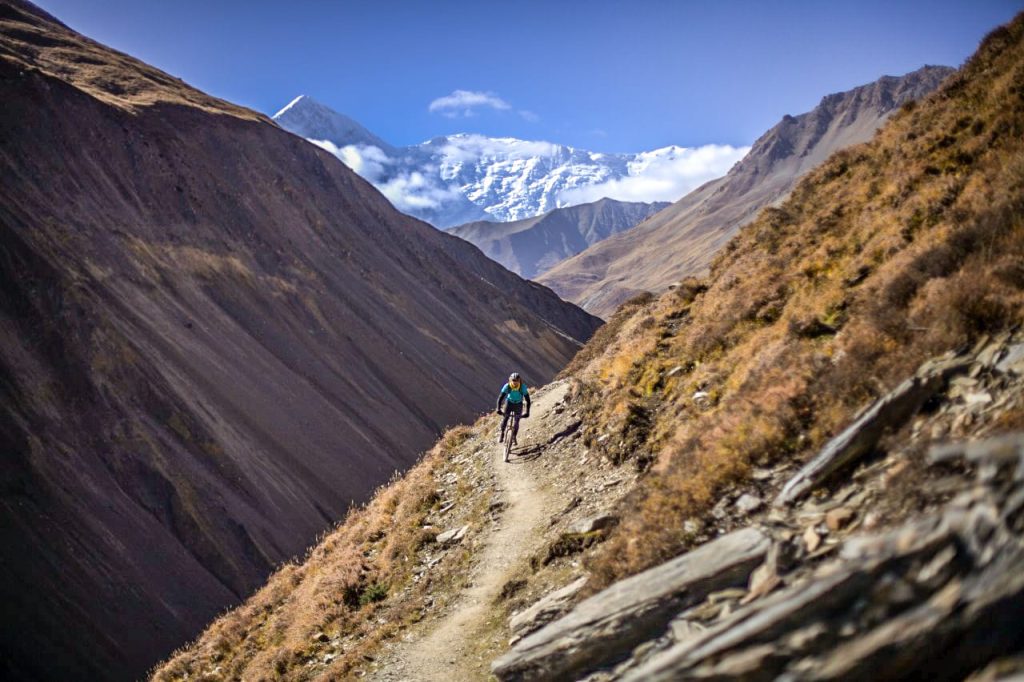
Technical and extreme in parts; possible for small expert groups.
We scout these routes continually. If you’re interested in a frontier ride, ask us. We’ll share our latest reconnaissance, risk assessment, and permit requirements.
Summary – The Spirit of Riding in Nepal
Riding in Nepal is an intimate conversation with mountains and people. You earn every view with a climb and you trade stories over tea in lodges that have seen generations pass by. For 2026, the top five trails we recommend balance spectacle, culture, and achievable adventure: Annapurna for epic circuits, Mustang for a desert-plateau romance, Langtang/Helambu for forested singletrack, Kathmandu rim for cultural warmups, and Pokhara’s loops for scenic, manageable days.
If you want a Himalayan MTB adventure that respects the land, supports the communities, and keeps mechanical and medical safety foremost, we invite you to ride with RM Treks. We’ll bring the local knowledge, the logistics, and the humility the mountains expect.
FAQs
1. Do I need to bring my own mountain bike?
No. You can bring your own if you prefer, but RM Treks can organize high-quality rental bikes (full suspension or hardtail) and spare parts. For international flights, consider shipping costs and potential damage; rentals in Nepal are a practical alternative.
2. What fitness level is required?
Levels vary by route. Short, scenic loops (Kathmandu rim, Pokhara Dhampus) are suitable for moderately fit riders who can handle 3–5 hours of riding a day. High-altitude circuits (Annapurna, Manaslu) require strong endurance and prior multi-day experience. We’ll assess your fitness during booking and tailor the pace.
3. Are high-altitude MTB tours safe?
They can be, with proper acclimatisation, a conservative plan, and experienced guides. High passes bring cold, wind, and rapid weather change; our policy is to prioritise safety over a summit or pass attempt.
4. What’s the best season for each trail?
Annapurna & Langtang: spring & autumn. Upper Mustang: spring, autumn (and winter for those who tolerate cold). Pokhara & Kathmandu rim: spring, autumn, and many winter days. Monsoon generally limits riding; avoid June–August except for special dry zones.
5. Are permits and logistics handled by RM Treks?
Yes. For restricted areas (e.g., Upper Mustang) we handle permits, local liaison, and accommodation bookings.
6. Can beginners join guided MTB trips?
Yes, on easier routes and with appropriate preparation. We also offer skills coaching and rider assessment on day one.
7. How does RM Treks ensure safety during remote rides?
We carry field mechanics, satellite communications, first aid kits, and have evacuation plans. Guides are trained in first aid and high-altitude protocols.
8. What accommodation is provided on MTB tours?
It depends on the route: teahouse/lodge stays for Annapurna, homestays and simple guesthouses in Mustang and Langtang, and upgraded lodges for premium clients. Camping can be arranged for highly remote or custom expeditions.
Ready to Ride?
If the mountains are calling, let us answer with a plan that balances thrill and care. Tell us your preferred dates for 2026, your riding experience, and whether you want a cultural focus or a technical challenge, we’ll design a bespoke MTB itinerary that brings the Himalayas to your wheel. WhatsApp us now.
The RM Treks Team