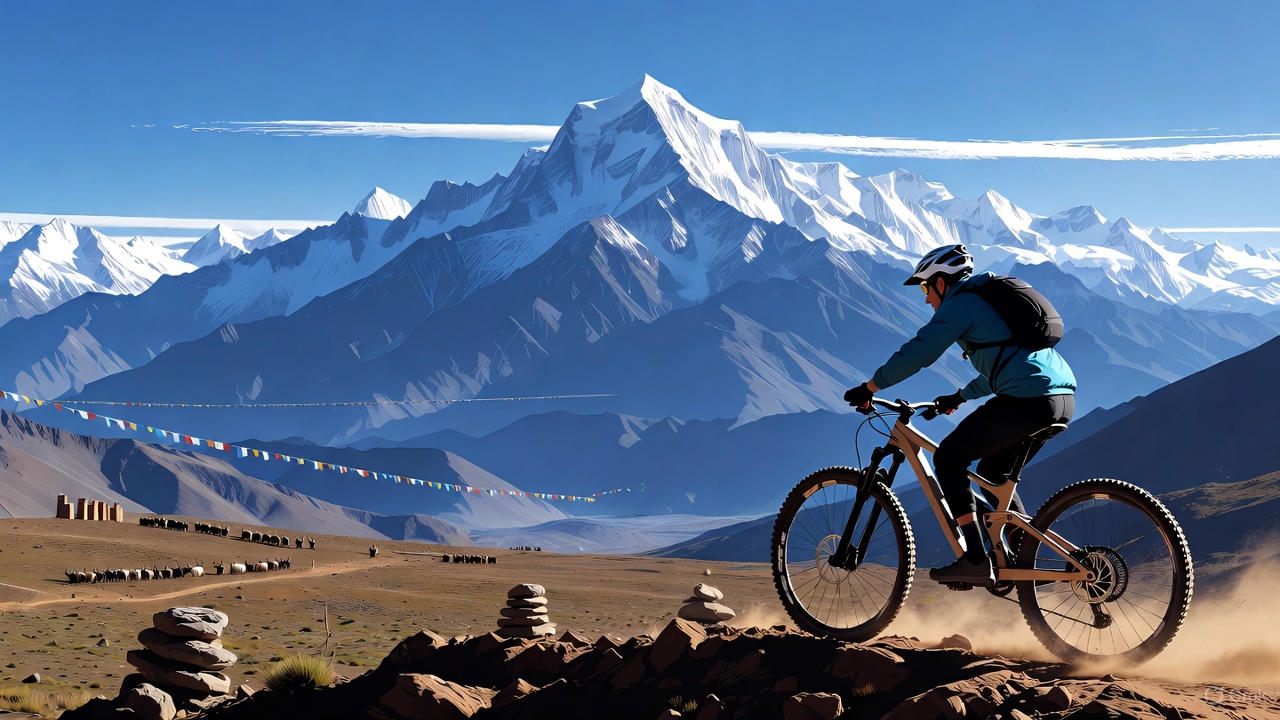
High-altitude cycling in Nepal is a rare kind of journey: a mechanical dialog between rider and mountain, where every pedal stroke is answered by wind, thin air and centuries of human life on the trails. From the terraced foothills of Annapurna to the arid plateaus of Mustang, and from Langtang’s forested singletrack to Manaslu’s wide river valleys, the Himalaya offers terrain few other riding landscapes can match.
But altitude changes everything. Above roughly 3,000 m (9,840 ft) the air thins, power output drops, and both bike and rider behave differently. For cyclists this is not merely harder: it’s technical, physiological and logistical. We wrote this guide because we’ve guided cyclists along these routes; we’ve wheeled bikes through light sleet at 4,000 m, fixed drivetrains by headlamp in remote villages, and helped riders acclimatize so they could enjoy the descent rather than fight it.
This is a practical, no-nonsense manual: physiology explained simply, a 6–12-week training program, a step-by-step acclimatization strategy tailored to cyclists, detailed bike choices and packing notes, mechanical field guidance, nutrition and medical preparation, plus a sample Annapurna Circuit MTB itinerary. Everything here reflects our field experience and the RM Treks standard: safety first, local respect always, and uncompromised bike support.
1. Understanding High Altitude for Cyclists
What “high altitude” means? In plain rider terms
Altitude matters because it reduces the amount of oxygen available to your muscles and brain. At sea level the fraction of oxygen in the air is roughly 20.9%. What changes with altitude is barometric pressure, and therefore the partial pressure of oxygen: that is what your lungs can draw in each breath.
Practical reference points:
- ~2,500 m (~8,200 ft) : Many riders feel a modest reduction in sustained power and will notice higher breathing rates and slight fatigue earlier than at sea level.
- ~3,500 m (~11,500 ft) : Expect a measurable drop in aerobic power; climbs feel steeper, recovery between intervals takes longer.
- ~5,000 m (~16,400 ft) : You’re breathing roughly half the oxygen pressure compared to sea level; heavy sustained efforts become difficult and short, repeated power surges fall off dramatically. (Barometric and inspired oxygen pressure fall roughly linearly with altitude; inspired O₂ is about half sea-level at ~5,000 m). Reference 1, Reference 2
How altitude reduces cycling power
For athletes, the rule of thumb used in mountain physiology is that VO₂max (your maximal aerobic power) declines as altitude increases. Studies show reductions in VO₂max on the order of ~6–8% per 1,000 m up to around 3,000 m for trained athletes, and the reduction continues beyond that. This means a climb that was doable at sea level will demand significantly more effort at 3,000–4,000 m. With effective acclimatization some of this loss can be mitigated, but not entirely removed. Reference
Why cyclists often struggle more than trekkers
- Higher intensity bursts: Cyclists generate higher, more sustained absolute power than walkers. At altitude those bursts become harder to sustain, and your muscles fatigue faster.
- Rapid ascents: Riding tends to gain elevation quicker than hiking the same route, which can outpace acclimatization if not managed.
- Breathing mechanics: When seated and hunched, riders use a different respiratory posture than walkers; this can slightly reduce lung expansion when compared with upright trekkers, making the drop in oxygen feel more acute.
- Technical demands: Technical singletrack requires concentration and fine motor control: both impaired by hypoxia and fatigue. A small mistake on a loose descent at 3,800 m has bigger consequences than a slip at 800 m.
How altitude affects bike handling & components
- Braking and levers: Cold temperatures at altitude thicken hydraulic fluid slightly and may change brake feel; pre-ride warmups and short levers checks are essential.
- Tire pressure: Lower air density and cooler temperatures influence pressure. Tubeless setups are forgiving, but cold mornings may drop tire pressure; check before descents.
- Suspension: Cold air impacts damping rates; suspension can feel firmer; set sag weekend mornings to expected temperature range.
- Fueling/consumption: Engines (your legs) run less efficiently, expect more carbohydrate burn per hour for the same wattage.
We always advise riders to think of high-altitude tours as a hybrid of endurance racing, technical mountain biking and high-altitude mountaineering logistics: prepare for each domain deliberately.
2. Physical Training Plan (6–12 Weeks)
A cyclist preparing for sustained riding at 3,000–5,000 m should cultivate aerobic capacity, climbing strength, technical descending skill, and the ability to ride with a loaded bike. Below is a progressive, evidence-based approach that privileges volume, climbing specificity, strength and interval work.
Note: adjust for your current level. If you’re already riding 6–10 hours a week, a 6-week program is doable; novices should build over 12+ weeks.
Training principles
- Base first: Build steady aerobic volume at moderate intensity. Long, low-intensity rides increase mitochondrial density and fat-burning efficiency.
- Specificity: Include long climbs and repeated sustained uphill efforts to mimic mountain day demands.
- Strength: A 2–3x weekly gym routine focused on legs, core and upper body improves power output and bike control under fatigue.
- Interval training: Short VO₂ max intervals preserve maximal aerobic power, which drops at altitude.
- Technical sessions: Weekly skills work: berms, rock gardens, cornering and controlled braking; to reduce crash risk when hypoxic.
- Ride with weight: Train with a loaded frame bag or hydration pack to simulate bikepacking or support vehicle constraints.
Weekly framework (Sample: 8 week midpoint plan for intermediate rider)
Week structure (example):
- Mon: Active recovery, 60 min easy spin or mobility work.
- Tue: VO₂ intervals, 6×3 min at 105–110% FTP with 3 min recovery; core + mobility.
- Wed: Long endurance, 2.5–4 hrs at zone 2 (conversational pace).
- Thu: Strength session; squats, deadlifts, lunges, single-leg work + short technical session (1–1.5 hr).
- Fri: Rest or easy spin + technical skills (short pump track/flow practice).
- Sat: Hill repeat day; 4–6×10–20 min climbs at threshold on steady gradient; descent practice.
- Sun: Long ride; 4–6 hr with sustained climbs; finish with loaded riding practice.
Progression: Increase long-ride duration by 10–15% every 2 weeks; add one additional hill repeat per session every fortnight; keep interval intensity but slightly reduce volume as you taper.
Strength training (2 sessions/week)
- Compound lifts: squats, deadlifts (moderate weight, high quality reps), Bulgarian split squats.
- Core: planks, anti-rotation moves, farmer carries for single-side stability when climbing.
- Upper body: push/pull to maintain posture on long descents and heavy climbs.
Technical descending practice
- Practice controlled braking, body position changes, line choice on steeper grades.
- Learn to spot and manage traction transitions (dust to wet rock), because Himalayan trails change rapidly with elevation and weather.
Training with weight
- Simulate carrying a 6–10 kg load on the bike (tools, spares, small daypack) so climbing form and handling habits adapt.
- Do at least two multi-hour loaded rides before your departure.
3. Mental Preparation
High-altitude cycling is as psychological as it can get. The mountain’s weather and remoteness will test patience. Here’s how to build mental resilience.
Keep the tempo, manage emotional effort
Long alpine climbs encourage overexertion early. Adopt a conservative, metronomic cadence (70–80 rpm) on steep, long climbs. Resist the urge to sprint: energy spent early at altitude is expensive in oxygen.
Accept variability
Weather changes quickly. Plan for day-to-day variation. Practice shifting goals from “I must summit” to “I will enjoy today’s best lines and descend safely.” This reframing reduces risky pushes.
Visualization and pacing
Before high passes or technical sections, rehearse the line mentally. Visualization sharpens focus and reduces panic when oxygen is low.
Team mindset
Riding with a small, respectful group stabilizes morale. Our guides brief every participant: signals, stopping rules, and what to do if someone feels off. Clear social norms (no lone pushes up ridgelines) prevent poor choices.
4. Altitude Acclimatization Strategy for Cyclists
Acclimatization is the single most important safety measure for high-altitude cycling. It cannot be faked with extra training the week before or by “toughing it out.” You need a plan that balances elevation gain, rest, and progressive load.
Golden rules
- Ascend slowly : Once above ~3,000 m, aim for ≤300–500 m net gain per day before sleeping (Wilderness Medical Society guidance). Build rest days after 2–3 days of ascent. Reference
- Ride high, sleep low : Do longer day rides that reach higher altitude but return to a lower night camp when possible. This gives you exposure while letting the body recover at lower pressures.
- Hydrate & eat : Maintain calories and electrolytes; hypoxia increases basal metabolic rate.
- Use tools : Pulse oximeters to monitor SpO₂ and resting heart rate trends help guide decisions; lower saturations and rising resting HR indicate stress.
- Medicate with care : Acetazolamide (Diamox) can aid acclimatization and prevention of AMS; typical prophylactic dosing is 125 mg twice daily starting a day before ascent, but only under doctor guidance. Steroids (dexamethasone) are for treatment of severe AMS/HACE and should be used under medical advice. Reference
Why cyclists ascend too quickly
Riding covers distance faster than hiking; a single long pedal can move you multiple altitude bands in a day. This is efficient for logistics but risky for physiology. Our approach: staged riding, plan days that keep sleeping elevation conservative and use vehicle shuttles to manage long transfers.
RM Treks’ acclimatization philosophy
- Plan with buffer days built into every itinerary.
- Progressive exposure: initial days include valley and mid-hill rides to settle, then a controlled push to higher valley camps.
- Objective metrics: morning oximetry, resting HR checks, symptom questionnaires each day. If SpO₂ is falling and symptoms appear, we rest or descend.
- No macho rules: if a rider shows AMS signs, we stop ascending. Most altitude illness is preventable with caution and a plan.
AMS, HAPE, HACE: cyclist-specific signs & response
- AMS (Acute Mountain Sickness): Headache, nausea, poor sleep, dizziness. For cyclists, persistent headache plus decreased coordination is a red flag. Rest, hydrate, consider acetazolamide, and stop ascent.
- HAPE (High Altitude Pulmonary Edema): Exertional breathlessness that worsens at rest, frothy sputum, cough. HAPE can progress quickly and requires descent and oxygen.
- HACE (High Altitude Cerebral Edema): Confusion, ataxia, inability to continue. Immediate descent, oxygen and dexamethasone.
- When to descend: Any signs of HAPE/HACE or AMS worsening despite rest; if oximeter readings drop sharply below personal baseline (<80% at high altitude depending on altitude and condition), descend. We always have descent plans and heli evacuation protocols for severe cases.
5. Choosing the Right Bike for High-Altitude MTB
Your bike must be reliable, easily repairable in remote contexts, and suited to mixed terrain: long gravel climbs, technical descents, and dusty jeep tracks.
Full suspension vs hardtail
- Full suspension: (120–160 mm travel) is preferred on technical singletrack and long descents (comfort and control).
- Hardtail: Is lighter for long gravel climbs and easier to maintain in remote areas.
For Annapurna Circuit and Mustang where long gravel and rocky descents dominate, a robust hardtail or trail full-suspension with good travel is ideal.
Wheel size: 27.5 vs 29
- 29er : Rolls over obstacles better and maintains speed on long climbs and gravel. Preferred for endurance mountain touring.
- 27.5 : More playful, better for tight, technical singletrack.
Choose by route: Mustang and long gravel favors 29; steep wooded singletrack (Langtang/Helambu) can suit 27.5.
Brakes & gearing
- Hydraulic disc brakes only. Reliable modulation and stopping power are essential, particularly in cold descents.
- Gearing: 1×12 with a wide range cassette (10–50/52) is the sweet spot for steep Himalayan climbs: simplicity and fewer mechanical problems than 2x drivetrains.
Tubeless tires
- Tubeless with sealant mitigates long puncture hassles. Tire width 2.3–2.5 offers traction on loose gravel yet rolls well. In Mustang’s sharp shale, tougher sidewalls are helpful.
Suspension setup for cold conditions
- Cold thickens damping; allow for slightly softer rebound to ensure traction in cool mornings. Check fork seals and service pre-trip.
Dropper post & bikepacking
- Dropper post is extremely helpful on technical descents and rapid transitions to hikeable sections.
- For multi-day unsupported rides, use low-profile frame bags and a sturdy handlebar roll; keep weight centralized.
6. Bringing Your Own Bike vs Renting
Bringing your own bike (pros & cons)
Pros: Familiarity, tuned suspension, preferred cockpit setup.
Cons: Airline damage risk, expensive bike boxes, customs complexity, repair parts limited in-country for niche brands.
Airline tips: Use a well-padded hard case or premium bike box. Remove pedals, handlebars rotated, fork detached (use a headset block), and secure small parts. Carry essential spares in your carry-on.
Renting in Nepal (pros & cons)
Pros: Avoids airline hassles, locally maintained bikes prepped for routes.
Cons: Limited selection of top-end frames, possible fit compromises.
RM Treks offering: We provide assistance with high-quality rental bikes, full toolkits, field mechanic and spare parts for common wear items. If you prefer your bike, we assist shipping logistics and airport handling as well.
Essential spares to bring (if you bring your bike)
- Chain quick link (2), derailleur hanger, spare brake pads, 1 tube per wheel (if not tubeless), tubeless sealant, cables if your drivetrain uses them, multi-tool, rotor bolts. Also bring a compact pump and tubeless repair kit.
7. Bike Maintenance in the Himalayas
Mountain conditions in Nepal are varied: dust in Mustang, grit and mud in monsoon season, cold in high passes. Maintenance habits will keep you riding.
Daily checks
- Quick visual: brakes, tyre condition, headset play, dropper operation.
- Chain: clean lightly and lube each night; dust plus sweat accelerates wear. Use a dry lubricant in dusty conditions.
- Brakes: check pad wear each morning; long descents accelerate wear.
Tire pressure monitoring & management
- Start the day a touch higher in cool mornings; as the day warms and you descend, lower pressure slightly. Tubeless setups tolerate this better.
Drivetrain care
- Use quality chain lube and wipe after dusty sections. A noisy drivetrain can indicate a stretched chain and the need for replacement.
RM Treks’ mechanical support
All our trips (fully guided) include a dedicated mechanic or mechanic-guide, spares for common issues, and a support vehicle that can carry a damaged bike to the nearest town. For remote expeditions we carry extra wheels, rotors and cassettes.
8. Gear & Equipment Checklist
Below is our field-tested checklist; bring what you need and you can trust RM Treks to fill gaps where possible.
Cycling Gear
- Bike (rented or personal), helmet, gloves (light + warm), knee pads (optional), cycling shoes, pedals (bring your own if clipless).
- Hydration pack (2–3 L), frame bag for tools.
- Tubeless setup & sealant, spare tubes, mini pump, multi-tool, chain quick link.
Altitude Essentials
- Pulse oximeter, sleeping bag rated to expected night temps, warm liner for sleeping bag, hot water bottle (where available).
- Diamox (acetazolamide) if prescribed, personal medications.
Safety & Protection
- First-aid kit, blister kit, headlamp with spare batteries, satellite communication device (we provide group units), emergency blanket.
Clothes (layer system)
- Base layers (merino or synthetic), insulating mid layer (light down), windbreaker shell (waterproof), lightweight thermal for nights.
- Warm hat, buff, liner gloves, waterproof overmitts for high passes, spare socks.
Repair Kit
- Spare chain link, derailleur hanger, spare brake pads, rotor bolts, spare cables (if mechanical), zip ties, duct tape, patch kit.
Electronics
- Power bank (20,000 mAh), charging cables, small solar panel (optional), camera, GPS device.
Hydration & Nutrition
- Electrolyte tablets, energy bars, mixable powders, high-calorie snacks (nuts, dates), trail food for remote days.
Documents
- Passport, Nepal visa, travel insurance with heli-evac coverage to 6000 m, permits (e.g., TIMS, ACAP, Upper Mustang permit), emergency contacts.
9. Weather Expectations (Seasonal Details)
Autumn (Sep–Nov); peak riding window
- Temperature: valley days 10–20 °C; nights cool to near freezing at higher camps.
- Trails: dry and compact, high visibility.
- Risk: late monsoon landslides possible early in September; air pollution can occasionally reduce distant views.
Spring (Mar–May)
- Temperature: warming; rhododendron bloom in mid-hills.
- Trails: forgiving, some dusty sections; occasional afternoon squalls.
- Risk: variable late-spring snow at higher passes.
Winter (Dec–Feb)
- Temperature: cold nights, especially above 3,000 m; daytime sun can be pleasant.
- Trails: lower altitude loops excellent; high passes may be snowbound.
- Risk: frost, icy sections on shaded descents.
Monsoon (Jun–Aug)
- Trails: often muddy and unstable; avoid most routes.
- Exceptions: Mustang and rain-shadow areas may be rideable but still dusty and slippery in local storms.
High passes bring strong winds, rapid weather swings and a thin, sharp sun. Plan for windproof layers, full eye protection and rapid shelter options.
10. Transportation, Staff & Safety
Transport & logistics
- Airport pickup: KTM (Tribhuvan) or domestic flight to Pokhara/Jomsom depending on route.
- Trailheads: private jeep/4×4 transfers to trailheads; vehicles often run ahead for luggage and support.
- Support vehicle: for multi-day group tours, a backup vehicle carries spare parts, camping gear and offers bailout options.
Staff composition (typical to RM Treks expedition)
- Lead MTB guide: route leader, pacing, acclimatization decisions.
- Assistant guide / sweep: supports the back of the group.
- Mechanic: daily maintenance and field repairs.
- Driver(s): local experts for tricky roads and river crossings.
- Porters / logistic staff: carry food, tents (if camping) and communal gear.
- Cook: for full service camping expeditions.
Safety systems
- Daily health checks (SpO₂, resting HR, symptoms).
- First aid & trained guide staff in HACE/HAPE response.
- Satellite phone / Garmin inReach for remote comms.
- Insurance requirements: travel insurance covering high-altitude rescue and helicopter evacuation is mandatory for high pass expeditions. We can recommend providers and verify policy details before departure.
11. Nutrition for High-Altitude Cycling
Nutrition at altitude is an understudied but crucial factor. Hypoxia increases carbohydrate reliance and appetite can drop, a dangerous combo. Our dietary approach prioritizes palatable, calorie-dense, and frequent feeding.
On-trail fueling
- Short bursts (up to 2 hours): dense bars, gels, bananas.
- Long days (4–8 hours): consistent small feeds every 20–30 minutes (handful of nuts, small energy chews) plus a mid-ride warm drink.
- Electrolytes: use tablets in water regularly; altitude increases diuresis and electrolyte loss.
Tea-house & camp meals
- Carbs first: rice, noodles, potatoes, porridge.
- Protein recovery: lentils, eggs, chicken where available. Dal bhat is excellent for altitude energy and electrolyte balance.
- Warm liquids: soups and tea are vital for comfort and hydration.
Hydration plan
- Aim for 3–4 L per day on long alpine days (higher at altitude and in dry climates like Mustang). Sip frequently; don’t wait for thirst. Include sodium/electrolyte replacements throughout the day.
12. Pre-Trip Medical Preparation
Doctor consultation & tests
- Visit a physician specialising in travel or sports medicine. Discuss:
- Cardiac screening if over 40 or with risk factors.
- Fitness to perform sustained exertion at altitude.
- Prescription of acetazolamide (if appropriate) and a tailored medication plan.
Vaccinations & meds
- Standard travel vaccines per country guidance. Bring a personal first-aid kit and any chronic medications in original packaging.
When not to attempt high altitude rides
- Active respiratory infection, uncontrolled cardiovascular disease, pregnancy beyond early trimester, or serious recent concussion; consult a physician. Some chronic pulmonary conditions may preclude safe high-altitude exertion.
13. Cultural & Environmental Etiquette
We ride through communities where support is given with trust. Respect is simple: ask before photographing people, remove shoes when entering certain prayer buildings, accept tea and hospitality politely, and never leave waste.
- Prayer flags & stupas: Ride around, not over. Pause and observe.
- Tea-house etiquette: Remove muddy shoes, share communal space, tip fairly.
- Waste management: Pack out non-biodegradables; use refillable bottles. RM Treks always works with lodges to minimize single-use plastic.
Our ethic is to leave places better off for having hosted us: hire local guides, use local food, and contribute to maintenance funds where we ride.
14. Sample High-Altitude Cycling Itinerary
Annapurna Circuit (12 Days, Moderate-Advanced)
Overview: A lodge-based, staged circuit focused on altitude adaptation and rideability. Our route avoids the most dangerous walking sections, uses shuttle assistance where necessary, and builds rest days for acclimatization.
Day 1 — Arrival Kathmandu (1,400 m)
- Activity: kit check, final bike fit, safety briefing.
- Notes: relax, hydrate; sleep early.
Day 2 — Drive/flight to Pokhara (820 m)
- Activity: easy ride around lakeside to test bikes; final spares check.
- Notes: light riding only; carb-rich dinner.
Day 3 — Drive to Beni (900–1,000 m), short ride
- Distance: 40–60 km by road/ride; gentle climbs.
- Notes: buffer day; long vehicle transfer plus short ride to warm legs.
Day 4 — Ride Beni → Tatopani (1,200–1,600 m)
- Distance: ~50–70 km; mixed gravel.
- Elevation gain: 1,000–1,300 m (staged).
- Cultural: village tea stop; hot springs in Tatopani.
- Acclim: easy pace, hydrate well.
Day 5 — Tatopani → Ghorepani/Poon Hill area (2,700–2,900 m)
- Distance: ~30–45 km; steeper climbs.
- Elevation gain: significant — take a relaxed day.
- Notes: important acclimatization night; ride high, sleep low principle: consider a daytime recon higher and descend to lower night camp.
Day 6 — Rest / short acclimatization ride
- Activity: short technical ride, gentle climbs, oxygen & oximeter checks.
- Notes: a key recovery day.
Day 7 — Ghorepani → Jomsom (2,700 m) by mixed routes
- Distance: 40–70 km; includes high valley riding and long descents.
- Terrain: rocky, dusty; prepare for wind.
Day 8 — Jomsom → Muktinath (3,760 m) — staged ascent
- Distance: variable; this is a day for altitude exposure.
- Highest altitude: approach to Muktinath may reach ~3,700–3,800 m.
- Notes: consider vehicle shuttle for sections if weather or riders’ SpO₂ not ideal.
Day 9 — Rest / cultural day at Muktinath
- Activity: cultural visit, short ride loops for exposure, medical checks.
- Notes: key acclimatization stop.
Day 10 — Return ride to Tatopani / lower valley
- Distance: long day focused on descent & recovery.
- Notes: enjoy long flowing descents; mechanical check.
Day 11 — Drive to Pokhara, recovery day
- Activity: lakeside rest, massage, kit service.
- Notes: debrief and celebrate.
Day 12 — Return to Kathmandu or onward
- Activity: flight/drive back; gentle spin optional.
This itinerary is flexible: we build in vehicle shuttles, extra rest days, and mechanical days. The goal is to expose riders to the high valley while ensuring safe sleep altitudes. View full itinerary.
15. Why Prepare With RM Treks
We’ve been leading multi-day, high-altitude cycling expeditions, and approached MTB the way we approach safe trekking: local knowledge, conservative decision-making, and logistical thoroughness.
- Local MTB expertise: Our guides are from the region, ride these trails regularly, and understand microclimates and local infrastructure.
- Premium safety standards: daily health checks, satellite comms, qualified first-aid trained guides and helicopter evacuation plans.
- Mechanical support: dedicated mechanics on most expeditions, full spare wheels and parts, supported vehicles for bails.
- Ethical operations: fair wages for porters and staff, partnerships with local lodges and supply chains.
- Small group focus: we run small, respectful groups so pace, safety and cultural interactions are preserved.
We don’t promise “epic at all costs.” We promise epic that’s planned, safe and respectful: the only type of epic we accept in the Himalaya.
16. FAQs
Not the high passes immediately. Beginners can build up with valley and mid-hill trips (Pokhara, Kathmandu rim) and take guided skills days. For high passes we require robust prior multi-day riding experience.
Parts are rideable, parts may require pushing or shuttle assistance. We design circuits that prioritise safe ridability and avoid exposed walking-only sections where possible.
Minimum 2 nights above 3,000 m is common protocol; but we advise staged exposure with rest days and monitoring; exact plan depends on route and individual response.
A 29er trail bike with 120–140 mm travel or a robust hardtail with a wide-range 1×12 drivetrain. Hydraulic discs and tubeless tires are essential.
We have contingency plans: vehicle shuttles, alternate lower-route passages, or staged descent. We always prioritize safety over summit.
Yes. RM Treks provides high-quality rentals and mechanic support. For top-end custom fit bikes, bringing your own may be necessary.
E-bikes are heavy and logistics heavy; battery shipping is complex and airport restricted. Contact us for specific routes, we can sometimes arrange e-assistance locally but generally traditional MTB is recommended.
Travel insurance that explicitly covers high-altitude helicopter evacuation (up to at least 6,000 m) and emergency medical repatriation.
Settlements and lodges have limited power, charge banks nightly; bring a 20,000 mAh power bank. Remote areas may have solar charging only.
Many do but not all of them. We specially vet lodges for rider support (secure bike storage, drying areas, hearty meals).
Conclusion: The Mountain Reward
High-altitude cycling in Nepal is unforgiving and generous in equal measure. It asks for preparation, humility and respect. And in return it gives light that makes ridgelines soar, descents that feel endless, and human exchanges that linger. If you prepare your body, mind and bike, and join a team that knows these mountains intimately, the Himalaya will not simply be a challenge, it will become a story you can ride on forever.
If you’d like, RM Treks can:
- Customize an Annapurna or Mustang cycling expedition for your group.
- Provide bike rental, mechanic support, and a pre-departure training checklist.
- Send you a packing list and the detailed 12-week training plan we use with clients.
Ride safely. Ride respectfully. See you on the trail.
The RM Treks Team