Arriving in Kathmandu for the first time can feel overwhelming, especially after a long flight from Canada. This Kathmandu arrival guide for Canadians is written from the on-ground perspective of RM Treks’ operations team, the same people who meet travelers at the airport every week. Consider this a calm, step-by-step mentor walking you through money, SIM cards, airport transport, and where to stay your first night, with realistic costs converted to CAD and no guesswork.
This Kathmandu arrival guide is part of RM Treks’ Canadian Travel Guide — a collection of Canada-specific resources designed to help travelers plan every stage of their Nepal journey, from visas and flights to arrival logistics and trekking costs.
Before You Board — What You Should Prepare in Canada
Most Canadians arrive in Kathmandu via long-haul routes through Asia or the Middle East. If you’re still planning your journey or comparing routes and timing, this guide on cheap flights to Kathmandu from Canada explains realistic prices, best months, and airline options
A smooth Kathmandu arrival starts before you leave Canada. A little planning avoids airport stress, saves money, and keeps your first day relaxed.
Quick Canadian Pre-Departure Checklist
- Cash: Bring CAD or USD (newer notes preferred). Plan to exchange $40–$60 CAD equivalent on arrival.
- Cards: At least two debit cards (from different banks if possible). Notify your bank of Nepal travel.
- Apps to install: Google Maps (offline), WhatsApp, Pathao, inDrive.
- Hotel booked for Night 1: Strongly recommended, especially for late arrivals.
- Documents: Passport, visa payment plan, hotel confirmation (digital is fine).
For broader planning, see our Nepal travel guide: https://rmtreks.com/country/nepal/
Landing at Tribhuvan International Airport (KTM)
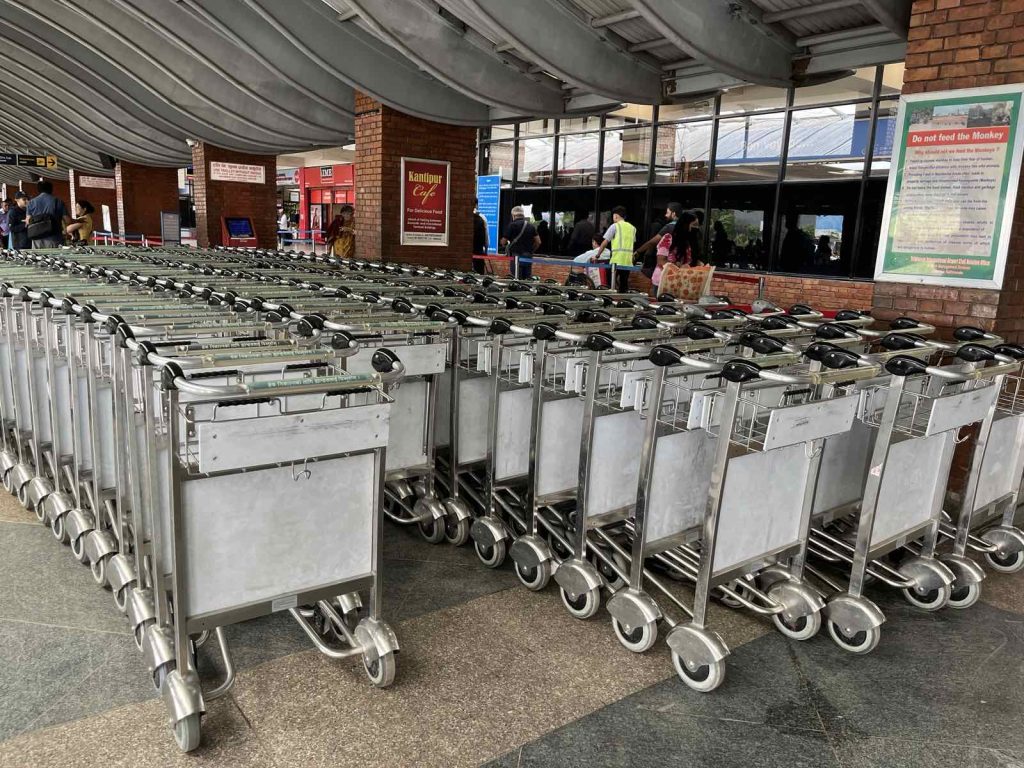
Kathmandu’s airport is compact and busy, but manageable when you know what to expect.
Entering Nepal — Immigration & Customs
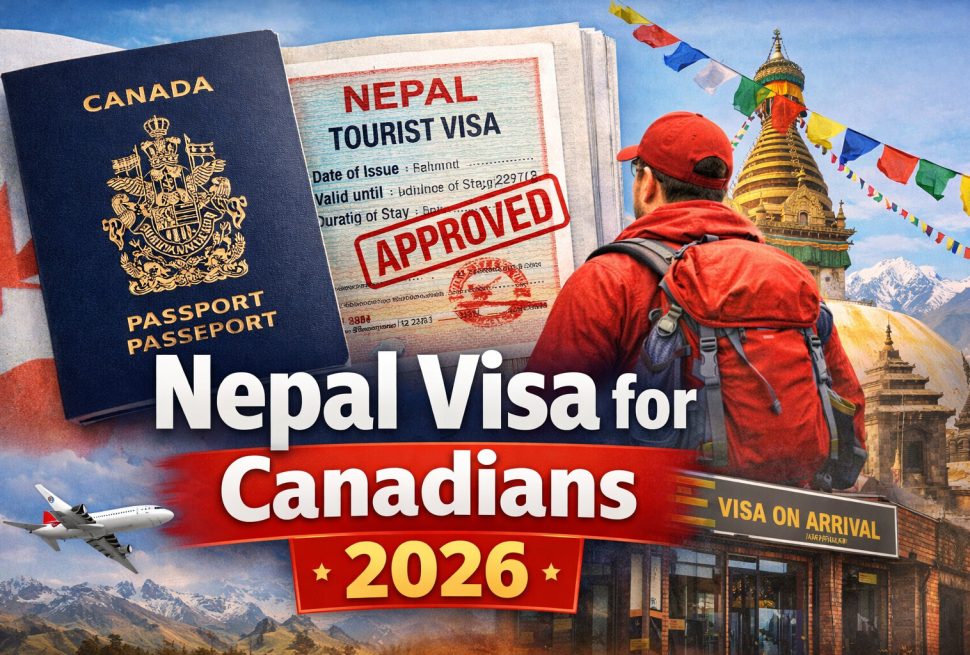
Canadians arriving in Kathmandu can obtain a visa on arrival, but understanding fees, duration options, and payment methods in advance helps avoid delays. For a complete breakdown, see our Nepal visa for Canadians step-by-step process.
- Visa on Arrival: Canadians are eligible. Have your passport, photo (or use airport photo booth), and payment ready.
- Time required: Typically 45–90 minutes from landing to exit, depending on flight volume.
- Customs: Routine; large cash amounts should be declared (rarely an issue for normal travel funds).
Money in Nepal — Airport Exchange vs. Kathmandu City
Nepal runs primarily on Nepalese Rupees (NPR). Cards are accepted at hotels and some restaurants, but cash is essential.
Airport Exchange
- Pros: Immediate cash for taxi, SIM, snacks.
- Cons: Slightly worse rates than city counters.
- Recommendation: Exchange $40–$60 CAD at the airport.
City Exchange / ATMs
- Better rates in Thamel and Lazimpat.
- ATMs typically charge NPR 500–700 per withdrawal (~$5–$7 CAD).
- Daily limits vary (often around NPR 35,000).
| Option | Typical Cost / Fee | Our Advice |
|---|---|---|
| Airport exchange | Slightly lower rate | Exchange small amount only |
| City exchange | Better rate | Main exchange here |
| ATM withdrawal | ~$5–$7 CAD fee | Use for backup cash |
Getting Connected — Buy a SIM Card in Kathmandu
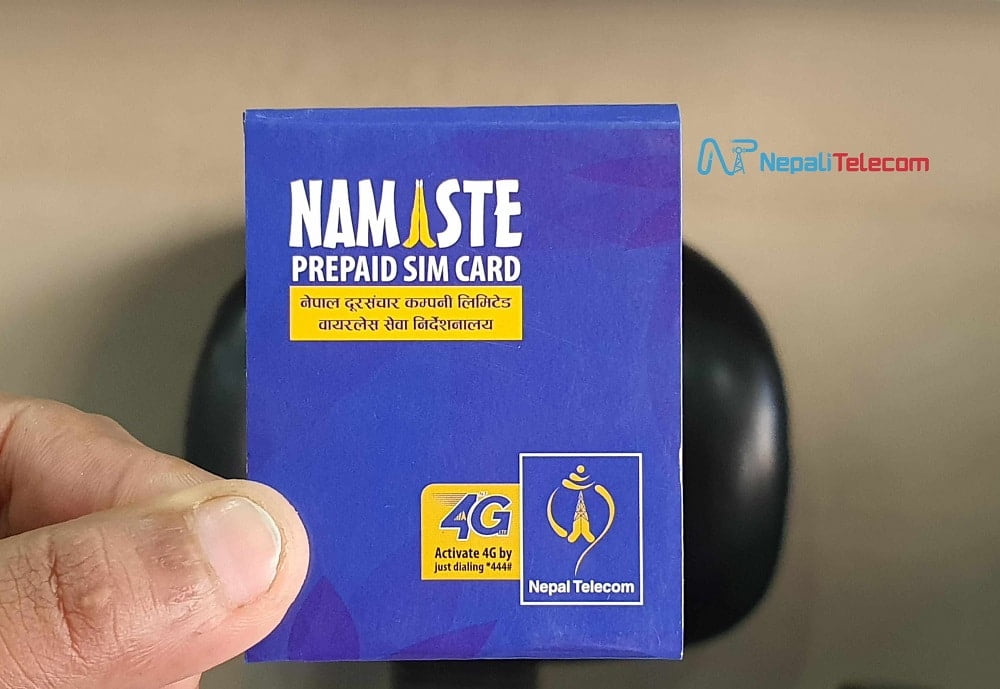
Local data makes everything easier; maps, ride apps, hotel calls, etc.
Main Providers
- Nepal Telecom (NTC): Best rural & trekking coverage.
- Ncell: Strong urban data speeds.
What Canadians Need to obtain a SIM card
- Passport
- Passport size photo
Typical Data Packages (2026)
| Provider | Data | Price (NPR) | Approx. CAD |
|---|---|---|---|
| NTC | 10–15 GB | 1,000–1,200 | $10–12 |
| Ncell | 10–20 GB | 1,200–1,500 | $12–15 |
Talking about an eSIM, available via international providers, but local SIMs are cheaper and more reliable in Nepal.
Airport to Downtown City — Transportation Options & Cost Estimates
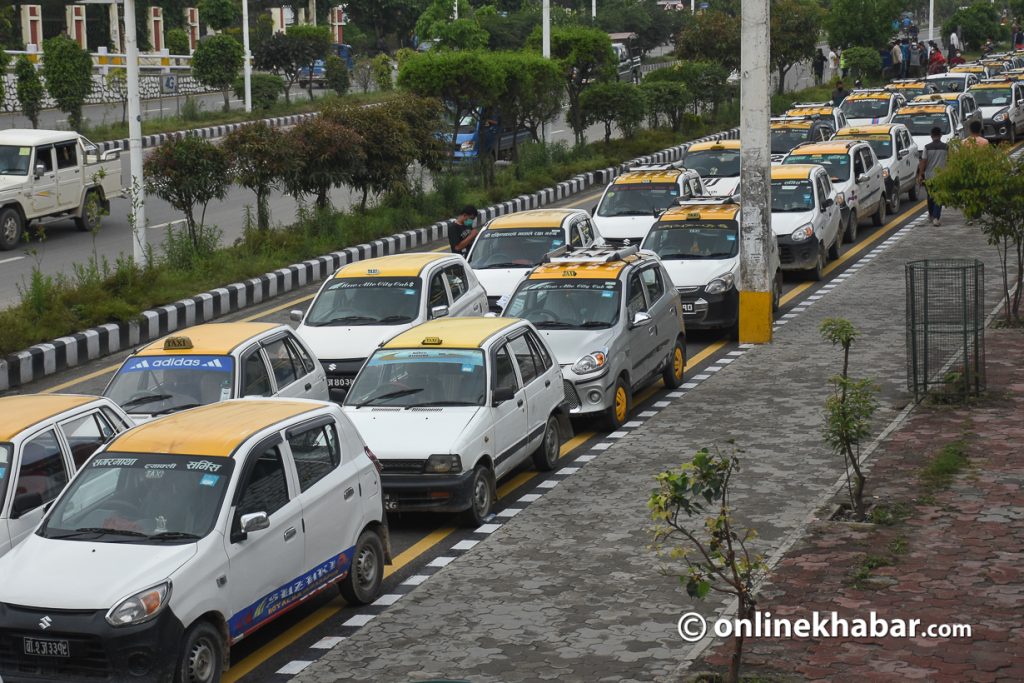
Official Prepaid Airport Taxi
- Cost: NPR 1,000–1,500 ($10–15 CAD)
- Best for: First-time arrivals, late night, peace of mind.
Local Negotiated Taxi
- Cost: NPR 800–1,200 ($8–12 CAD)
- Tip: Agree on price before getting in.
Ride-Hailing Apps (Pathao / inDrive)
- Cost: NPR 600–1,000 ($6–10 CAD)
- Note: Requires active local SIM and data connection.
Hotel / Pre-arranged Pickup
- Cost: NPR 1,200–2,000 ($12–20 CAD)
- Best for: Groups, families, late arrivals.
| Destination | Mode | NPR | CAD |
|---|---|---|---|
| Thamel | Prepaid taxi | 1,200 | ~$12 |
| Patan | Ride-hail | 900 | ~$9 |
| Boudha | Hotel pickup | 1,800 | ~$18 |
Your First Night in Kathmandu — Where to Stay ?
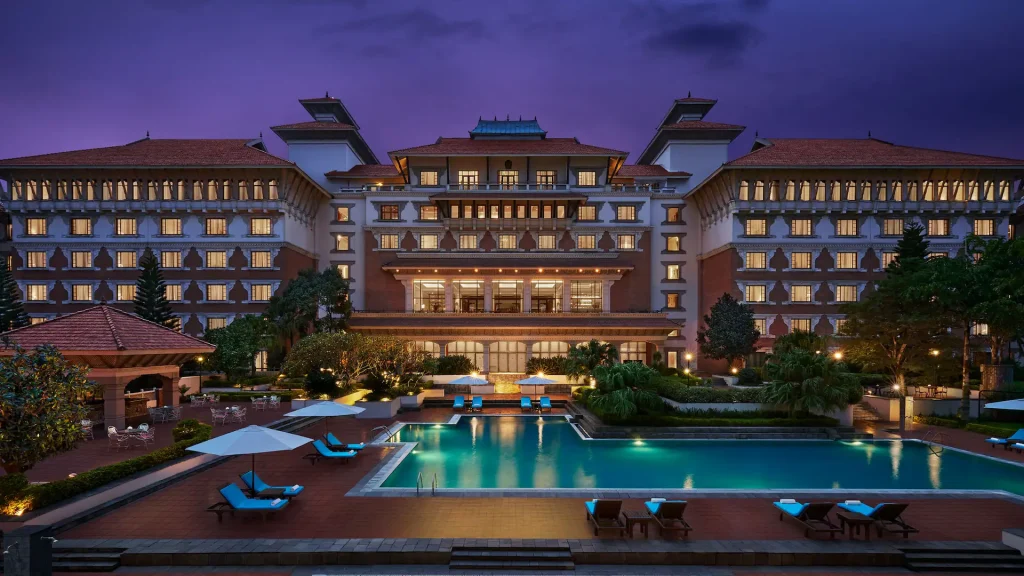
Budget & Mid-Range Guesthouses
- Areas: Thamel, Lazimpat
- Cost: $25–60 CAD/night
- Often include breakfast, is clean, safe, walking-friendly.
Comfort & Boutique Hotels
- Ideal for families or corporate travelers
- Cost: $80–150 CAD/night
- Also often include breakfast & airport transfer.
First-Night Safety Tips
- Keep passport & cash in one secure pouch
- Avoid late-night wandering on Day 1
- Get ample rest; jet lag + Kathmandu traffic is real, not just a myth
Practical Money & Payment Tips
- Keep small NPR notes (100–500) handy
- Cash for taxis, markets, tips
- Cards are widely accepted at hotels & upscale restaurants
Navigating Day One — Essentials After Arrival
- Explore Thamel cafés & gear shops
- Dress modestly, especially near temples
- Download offline maps immediately
If trekking soon, review our high-altitude safety tips: ttps://rmtreks.com/preparing-for-high-altitude-hiking-in-nepal/
Cost Summary — Arrival & First Night Budget (CAD)
| Item | Budget | Mid-Range | Comfort |
|---|---|---|---|
| Airport taxi | $10 | $15 | $20 |
| SIM + data | $10 | $12 | $15 |
| Hotel | $30 | $70 | $120 |
| Food & misc. | $15 | $25 | $40 |
| Total | $65 | $122 | $195 |
FAQs
Canadian passport holders do not need to arrange a visa before flying to Nepal. Nepal offers a Visa on Arrival facility at Tribhuvan International Airport, which is where most Canadians enter the country.
On arrival, you will:
– Fill out a digital arrival card (kiosk inside the terminal)
– Pay the visa fee in cash or card
– Receive the visa stamp directly at immigration
This process is routine for Canadians and is one of the most traveler-friendly visa systems in South Asia. There is no requirement to visit a Nepali embassy in Canada beforehand unless you prefer to.
Canadians should plan to arrive with enough foreign cash to cover the first 24–48 hours, but not large amounts.
A realistic recommendation:
– $100–200 CAD total, split between:
— $40–60 CAD to exchange at the airport
— The rest exchanged later in the city or kept as backup
This amount comfortably covers:
– Airport taxi
– SIM card
– First meals
– Emergency buffer if an ATM is unavailable
Nepal is a cash-heavy economy, especially for taxis, small hotels, and local restaurants.
Both CAD and USD are accepted at exchange counters, but USD is slightly more widely recognized and sometimes gets marginally better rates.
That said:
– Canadians do not need to convert CAD to USD before flying
– CAD is commonly exchanged in Kathmandu’s tourist areas
Best practice:
Bring CAD if that’s easiest. If you already have USD, that’s fine too. Avoid older or damaged notes.
The best strategy is to do both, intentionally.
At the airport:
– Exchange a small starter amount ($40–60 CAD equivalent)
– This covers immediate needs (taxi, SIM, snacks)
In the city (Thamel / Lazimpat):
– Exchange the rest at licensed money changers
– Rates are consistently better than the airport
This approach balances convenience and value, and avoids stress on arrival.
ATMs in Kathmandu generally work with Canadian debit cards, but travelers should understand the limitations:
– Each withdrawal typically has:
— A Nepali bank fee (~$5–7 CAD)
— Your Canadian bank’s foreign withdrawal fee
– Daily withdrawal limits are often lower than in Canada
– ATMs can occasionally run out of cash, especially on weekends
Smart advice for Canadians:
– Carry at least two debit cards
– Do not rely exclusively on ATMs
– Use ATMs as a supplement, not your only cash source
Yes. Canadians can buy a local Nepal SIM card directly at the airport or later in the city.
Both main providers:
– Nepal Telecom
– Ncell
require:
– Passport
– A photo (often taken on the spot)
Airport SIM counters are convenient but may have:
– Shorter queues or occasional closures late at night
– Slightly fewer package options
If you arrive very late, buying a SIM the next morning in Thamel is completely normal.
For Canadians trekking outside Kathmandu, Nepal Telecom (NTC) is generally the better choice.
Why:
– Wider coverage in mountain regions
– More consistent signal in rural areas
– Preferred by local trekking guides
Ncell often has faster data speeds inside cities, but coverage can drop earlier on trekking routes.
If you’re trekking after arrival, prioritize coverage over speed.
Mobile data is not strictly required in the first hour, but it becomes extremely useful quickly.
Data helps with:
– Ride-hailing apps (Pathao / inDrive)
– Google Maps navigation
– Contacting hotels or trekking operators
– Translation and emergency calls
If you don’t buy a SIM at the airport:
– Arrange hotel pickup in advance
– Or plan to use airport Wi-Fi briefly before exiting
For first-time Canadian visitors, the safest and least stressful options are:
1. Official prepaid airport taxi
2. Pre-arranged hotel pickup
These options:
– Have fixed or pre-agreed prices
– Avoid bargaining fatigue after long flights
– Are available even late at night
Ride-hailing apps are excellent once you’re settled, but require a working SIM and app setup.
Yes. Kathmandu is generally safe for Canadian travelers, even with late-night arrivals.
That said, common-sense precautions apply:
– Use prepaid taxi or hotel pickup after dark
– Go directly to your hotel
– Avoid wandering unfamiliar streets on Night 1
– Keep passport and cash secure
Most issues travelers face are logistical confusion, not safety threats.
For a smooth arrival, Canadians should choose:
– Thamel
– Lazimpat
– Boudha (if flying onward early)
These areas offer:
– Walkable streets
– 24-hour hotels
– Easy access to ATMs, SIM shops, and restaurants
Remote or residential neighborhoods are better explored after your first day.
A realistic first-day budget for Canadians (per person):
– Airport transport: $10–15 CAD
– SIM card + data: $10–15 CAD
– Hotel (mid-range): $50–80 CAD
– Meals & small expenses: $15–25 CAD
Total: ~$85–135 CAD
Budget travelers can spend less; comfort travelers may spend more. These figures reflect realistic on-the-ground costs, not promotional estimates.
Credit cards are accepted at:
– Hotels
– Larger restaurants
– Travel agencies
But cash is still essential for:
– Taxis
– Local eateries
– Markets
– Tips and small purchases
Do not assume “tap and pay” availability like in Canada. Nepal is still cash-first.
Common mistakes first-time Canadians make:
– Exchanging large sums at the airport
– Overpaying for taxis due to fatigue
– Trying to sightsee immediately after landing
– Wandering late at night with luggage
– Relying only on ATMs
The best approach is to rest, hydrate, and settle logistics on Day 1.
It can feel intense at first — traffic, sounds, crowds — but this passes quickly.
Once logistics are handled:
– The city becomes navigable
– People are helpful and accustomed to tourists
– Systems begin to make sense
Most Canadians report that Day 2 feels dramatically easier than Day 1.
Tipping is not mandatory in Kathmandu, but appreciated.
General guidance:
– Taxi drivers: no tip required, round up if you wish
– Hotel staff: small tip for luggage assistance
– Trekking staff: tipping is customary later, not on arrival
No one will pressure you.
After Arrival — Planning Your Trek from Canada
Once your arrival logistics are sorted — airport transfer, SIM card, and first-night hotel — the next step is planning how your journey continues beyond Kathmandu. Many Canadians begin planning iconic treks like Everest Base Camp. If budgeting is a priority, this detailed breakdown of Everest Base Camp cost for Canadians explains realistic expenses in CAD, including permits, guides, flights, and accommodation.
If you’re traveling from Canada and want a clear overview of routes, seasons, costs, and preparation, start here:
👉 Nepal trekking from Canada: https://rmtreks.com/nepal-trekking-from-canada/
Conclusion — Start Your Nepali Adventure Right
Kathmandu rewards preparation. Once your money, SIM, transport, and first night are sorted, the city feels welcoming and surprisingly easy. From here, you can confidently move on to exploring culture—or starting a trek like the Everest Base Camp trek or other Nepal trekking options.
RM Treks is always happy to assist with airport pickups, SIM setup, hotel recommendations, and seamless onward travel.
Related Canadian Travel Guides
If you’re planning your Nepal trip from Canada, these Canada-specific guides may help you prepare more confidently:
- Nepal visa requirements explained:
Nepal visa for Canadians step-by-step process - Best routes and airfare timing:
Cheap flights to Kathmandu from Canada - Trek budgeting in Canadian dollars:
Everest Base Camp cost for Canadians - Explore the full collection here:
Canadian Travel Guide